





Question: The 2026 Jewish High Holy Days began this year at sundown on Friday, Sept. 11, 2026 with Rosh Hashanah and concluded at nightfall on Monday, Sept. 21, 2026, following Yom Kippur. Can you explain why those two holidays are so important? Trying to Understand
Dear Trying to Understand,
One of the liturgy we read on Rosh Hashanah and Yom Kippur sums it up quite well. The following is an excerpt from our High Holiday Machzor (prayer book):
“Let us describe the great holiness of this day, for it is awesome and frightening. On this day, [God’s] Kingship is uplifted, and Your throne is established with kindness, and You sit upon it in truth. True that You are judge, admonisher, knower and witness; and You inscribe, seal, record and count, and recall all forgotten things…
“On Rosh Hashanah [humanity’s] decree is inscribed, and on Yom Kippur it is sealed, how many will pass away and how many will be created, who will live and who will die; who will come to his timely end, and who to an untimely end… who will be at rest and who will wander about; who will have serenity and who will be confused; who will be tranquil and who will be tormented; who will become poor and who will become wealthy; who will be brought to a low state and who will be uplifted.
“But repentance, prayer, and charity annul the severity of the decree.”
In short, Rosh Hashanah (“Head of the Year”) and Yom Kippur (“Day of Atonement”) are the days that G-d sits in judgement – deciding the fate of all humankind. On Rosh Hashanah, G-d “inscribes” the ruling, and on Yom Kippur G-d “seals” the ruling. It is for that reason that the days of Rosh Hashanah and Yom Kippur are spent in synagogue in prayer –asking forgiveness of our wrongdoings, making commitments to be better in the future, all in the hopes of being inscribed in the book of life, and that any negative decree should be annulled.
One of the deeper meditations on the significance of these holy days, is the understanding that while G-d has hopes and expectations of each and every one of us, nevertheless even when we fall short of them, G-d makes himself accessible, and accepts our repentance. It is a tremendous gift that every one of us possess – the ability to change and improve, and to be accepted by G-d as if we had never committed the wrongdoing in the first place.
It is because if this gift that the Talmud (Taanit 26B) says, “Rabban Shimon Ben Gamliel say, there were no more joyous days than … Yom Kippur.” While Yom Kippur is a tremendously serious day, it is also a joyous one, for we are given the gift to be able to return to G-d.
The book of Proverbs (27.19) says: “the way water reflects a face to a face, so does the heart reflect another.” When we think about how G-d shows us his loyalty – giving us a second chance and accepting our repentance even when we may not deserve it, automatically – this creates a longing and desire in our hearts to show G-d that same loyalty. Our heart reflects his.
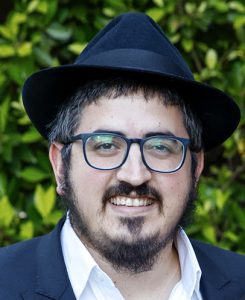
Rabbi Menachem “Mendy” Grossbaum
Chabad of the Crescenta Valley
CVChabad.org

SPIRITUALLY SPEAKING added by CV Weekly on
View all posts by CV Weekly →