





When the Jewel was on Sunset
The driver flipped the switch to engage the wipers. Even straining at full speed they did little to improve visibility through the driving snow. The large and plentiful flakes made it impossible to see far beyond the front of the truck. A wall of white was descending. Back in Tujunga, Ralph shouted into the phone, “What do you mean delayed? I have a theater to open. Snowstorm or not, I need those seats!”
This was just one of the concerns facing Ralph Peronnet before the grand opening of Tujunga’s first silent film house on Sunset Boulevard. It was March 1923 and he had been working tirelessly, overseeing the construction of the new building on Sunset Boulevard when news came that the seats were delayed due to an East Coast blizzard.
Residents were amazed at how quickly the walls and roof went up. The stage floor was complete and electricians were scurrying about, minding the wiring. The projection room was finished with a metal floor and workers lined the walls and ceiling with asbestos to ensure against fire.
Ralph Peronnet was the son of Jules, a Frenchman who arrived in New York in 1904 with his wife Marie and son. Jules had been an artist back in France and by 1910 he was in California operating his own sign painting company. The family moved to the heart of Hollywood and Jules put his talents to work for the movie business, making valuable contacts along the way.
Jules purchased the land for the first theater with the promise of bringing better films to Tujunga than a town of its size would usually receive. His son Ralph was the manager and Marie stepped in when needed. In late March, Ralph hired Ms. Marian Reynolds to play the piano for each silent film presentation and Jules painted the word THEATER on the rear of the building, large enough to be read down in Sunland.
The seats arrived on the Wednesday before the grand opening, which was scheduled for Saturday, April 7. A crew of five wasted no time installing them. The building had 30 feet of frontage on Sunset Boulevard. The location of the first theater in Tujunga corresponds to the address 9945 Commerce Ave. today. The street name change was forced upon the community in 1932 as part of Tujunga’s annexation to the city of Los Angeles. Next to the theater building was a 20-foot-wide empty lot in which a fence was built to display the colorful movie posters.
The Tujunga Valley Theater opened as scheduled on April 7, 1923. Speeches were made and all 360 seats were filled with happy patrons. Initially, films were shown each evening with adults charged 30 cents for admission and children 10 cents. In July, a Wurlitzer pipe organ arrived and was installed over the course of 10 days, enhancing the movie-watching experience.
Under the Peronnet family management, the theater was popular and a financial success so it’s unknown why, in the spring of 1924, William Ralph was named as operator. The quality of films declined and there were no longer nightly presentations. In October of that same year, workers arrived and started unbolting the seats. The theater was in trouble. The Peronnets returned to bring the theater back from the brink and to win back its former patronage.
Despite their return by early 1925, only two films were shown per week and in June 1925, the announcement was made that the theater had been sold to one of the most successful motion picture theater managers in Southern California: Harry T. Walz.
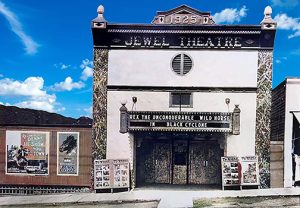
Harry remodeled the building and renamed it the Jewel Theater. A gala re-opening took place on July 8, 1925. The movie house seemed to limp along until the summer of 1928 when it was sold again. Just months later, the doors were shuttered for good and the Jewel Theater was no more.

VIEW OF THE VERDUGOS <<< CRAIG DURST added by CV Weekly on
View all posts by CV Weekly →