





Fire, Water & Steam on the America 250
We’re on our way into Sunland on the America 250 Trail, a tour of 25 places of historical significance in and around these parts.
Coming to 4947 Foothill Blvd., we’ve arrived at the former hot spot where the forge of the local blacksmith burned and he practiced his important trade. It’s No. 6 on the Trail.
There are no photographs of the blacksmith shop, which operated here shortly after the turn of the century. We only have the memories of the men who created this tour in 1975. They expressed their feelings then by stating, “Nothing can ever replace the old-time blacksmith shop.” They also shared the following:
“Anyone who has not, as a child, had the job of turning the hand crank on the bellows of a blacksmith’s forge and watching a piece of iron turn cherry red has missed a great thrill. In the early years here, a constant supply of boys from Sunland and Tujunga was available to the ‘smith’ or ‘smithy’ as we sometimes called him. He was always more than happy to take advantage of their youthful energy. Relieved of the prosaic work of turning the blower, he could then devote his full attention to horseshoeing, repairing intricate machinery, sharpening plows and repairing farm wagons.”
A few things we might imagine. The smell would have hit you before the sounds – coal smoke, hot iron, leather and sweat. The structure would most likely have had a large door or doors to release the smoke and heat. A horseshoe may have been hung, open side up – a symbol for both the trade and good luck. You might see a wagon wheel or two leaning against the wall, a barrel of water nearby, and a hitching post where the farmers could tie their horses.
Inside was the incessant clang, clang, clang of hammer striking iron. The forge dominated the room. This waist-high brick structure was where the coal burned intensely. The hand-cranked bellows forced air into the coals, turning them from dull red to near blinding white. An anvil was there, mounted solidly on a stump of hardwood, and the walls would have been lined with special tools. Here was both a workshop and a social hub.
Next up, and only a short distance away at the southeast corner of Woodward Avenue and Fenwick Street, is No. 7 on our tour – the Haines Canyon Water Company’s old well and pumping station. Now fully developed in the early 1900s, this was where a well was dug by the company responsible for providing water for the local population. From here, it was transported to a reservoir that appears as location No. 22 on this tour. We’ll get there.
Make your way back to the north side of Foothill Boulevard between McVine and Nassau avenues. This block housed Sunland’s short-lived steam laundry operation in the late 1920s. The historians in 1975 noted that remnants of the pipes and cement foundations from that old business were still there. Today, it’s the location of Burns Manor Apartments, a community for seniors. Nothing of the steam works remains at present.
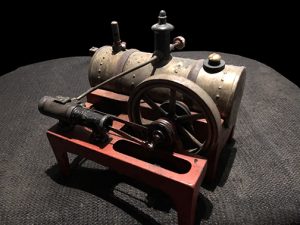
Steam laundries were once common. Coal-fired boilers generated steam and steam engines powered rotating shafts connected by belts to run the washing machines and presses. Electric washing machines became accessible to American households in the 1920s and ’30s and most likely put an end to this Sunland steam enterprise.
The Verdugo Hills Cemetery will host Steam Day on March 28 from 10 a.m. – noon. Currently we have two small steam engines to fire up, but we’re asking anyone who has one to join us to share your water-fueled contraptions. Here’s a shout-out to Jay Leno!
Please join us and bring your steam car to the party! Bring the kids to 7000 Parsons Trail in Tujunga.

VIEW OF THE VERDUGOS <<< CRAIG DURST added by CV Weekly on
View all posts by CV Weekly →