





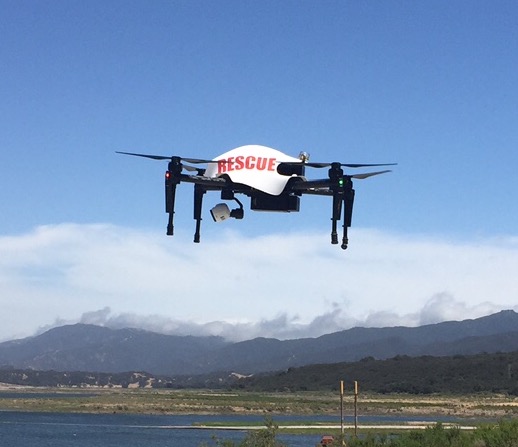
The public’s input is requested regarding the UAS program currently in use by the Los Angeles Sheriff’s Dept.
Photos provided by LASD
By Charly SHELTON
The Los Angeles Sheriff’s Dept. is seeking the public’s input on its unmanned aircraft system program. The Special Enforcement Bureau oversees the tactical and rescue aspect of the Sheriff’s Dept. – SWAT, divers, paramedics, bomb squad, hazmat, K9 and search and rescue – and this year it has taken on the UAS. The program began in January and, upon reaching its six-month mark, the SEB wants to gauge public opinion on the progress the program has made so far. And in all aspects, it wants to promote transparency, trust and communication.
“We have very strict, limited uses of the unmanned aircraft. Those uses are search and rescue missions, explosive ordnance detection missions, disaster response, armed and barricaded suspects, hostage situations, hazmat incidents and fire-related incidents,” said Jack Ewell, captain of the Special Enforcement Bureau. “We never call them drones because legally there is an FAA definition for certain types of unmanned aircraft. The definition for what we fly is unmanned aircraft system.”
He went on to say that drone is a slang word that is commonly used but the bureau avoids it because it’s not the legal definition and it also has a negative connotation.
“When most people think of drones, they think of military using force – dropping bombs, spying on people and that kind of thing,” he added. “So we call them unmanned aircraft but I fully realize that most people would call it a drone.”
This special quad-copter UAS has been called into action five times since January – 75% of the time was for search and rescue missions and 25% of the time was for active shooter missions, Ewell said. In addition to the active missions, there are training days and other activities the UAS is called out for and, in the spirit of transparency, each flight is announced ahead of time in the NOTAM, or the Notice To Airmen bulletin. Information is available to the public when the UAS will be flying and where.
“The one thing that always concerns people, and we address it in our program, is privacy rights. No one wants to be in their backyard with some police drone, or anyone else’s drone, looking into their personal business. So the way we address that, to make sure that the public is comfortable with the way we operate, is to not use our unmanned aircraft for any type of surveillance missions,” Ewell said.
He said that the bureau policy states that unmanned aircraft shall not be used for surveillance missions or missions that would violate the privacy rights of the public. There is a detailed description of the bureau’s policy for use on its website.
Given the amount of information available, the SEB is asking the public to take a short online survey to provide a sort of progress report for the uses of the UAS program. The survey is only four questions and will help to determine the future of the program.
“This is wide open to the public; you don’t have to have any training whatsoever. And on the webpage that shows the survey, it gives a little explanation of what we use it for. It asks [survey takers] to assess the program based on how we use it. We do know that anything could be used inappropriately and we don’t use it that way,” Ewell said. “We want the public to know exactly what the parameters of our program are and then comment on those parameters.”
The survey can be found at https://freeonlinesurveys.com/s/Z6nVDrT7 and will be available now through July 13. For more information on the UAS program and the full policy on the use of unmanned aircraft, visit http://bit.ly/2oddjyw.
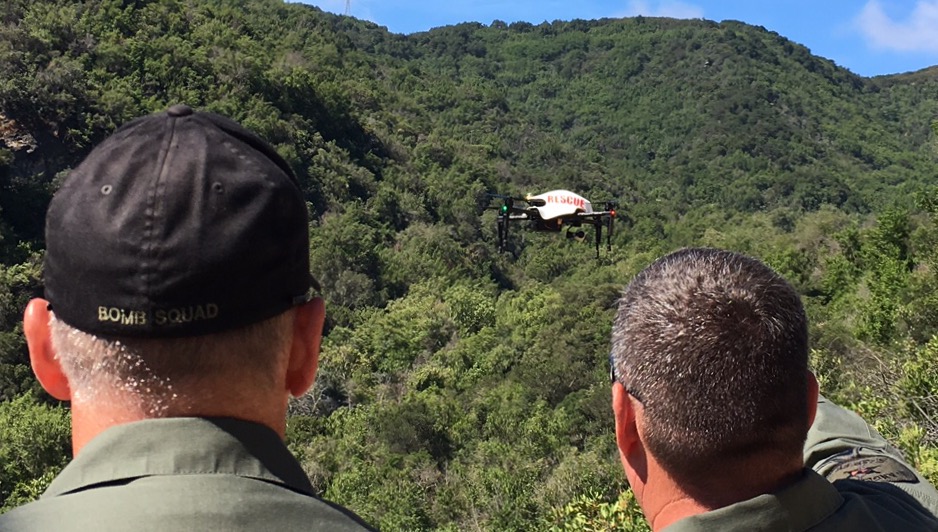
Members of the Special Enforcement Bureau monitor the flight of a UAS.

Public Input Asked for UAS Program added by CV Weekly on
View all posts by CV Weekly →