






Photos provided by Ascencia
By Mary O’KEEFE
“Lifting people out of homelessness one person, one family at a time.”
That is the mission statement of Ascencia in Glendale, a non-profit that provides housing and support services for homeless individuals and families.
In April Ascencia held its “Hope Starts Here” annual fundraising gala and also celebrated 17 years of helping those needing housing and support.
“It is our largest fundraiser event,” said Lauren Duncan, Ascencia executive director. “The [funds raised] go toward the mission.”
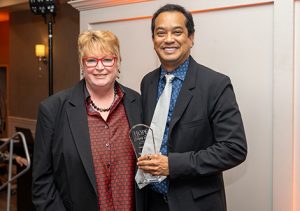
The funds are dedicated to general operations, programs and staff salaries.
“It’s pretty scary times right now,” Duncan added.
It’s scary because federal grants that are the lifeblood for many non-profits are getting canceled or in danger of not being renewed. Non-profits, like Ascencia, depend on grants and donations from the community and corporations to meet its budget; it is currently connecting with more corporate sponsors. However, due to the federal government considering canceling grants, it is difficult for most non-profits to plan for the future.
Ascencia was planning to expand its programs into other areas of Los Angeles County. Right now Ascencia provides street outreach in Glendale, Burbank, West Hollywood, Northeast Los Angeles and East Hollywood. It also has a 45-bed Emergency Housing program that accepts 300 residents annually; 99% of Ascencia clients stay housed for one year or more, according to the Ascencia website.
“We have been contracted with West Hollywood since 2016,” Duncan said. “My vision has been, up to this point, to expand [permanent] supportive housing programs. Once [residents] get in they stay but now the federal government [has proposed] getting rid of those programs and the voucher programs.”
The Trump administration’s proposed budget for fiscal year 2026 has deep cuts to HUD including Section 8 programs and homeless assistance programs. The proposal would eliminate federal aid and move to block grants to states.
“If the funding goes away we are going to look for private sources but it is going to be extremely competitive and not sustainable,” Duncan said.
Competitive because there will be many organizations that help with housing that will be competing for the few available corporate and private funding sources.
Another issue that Ascencia and other non-profits are struggling with is the inconsistency of the message by the federal government. At the beginning of the year all federal grants were canceled, then the cancellations were rescinded, which made it difficult for organizations to plan for the future.
Ascencia doesn’t just find housing for those facing homelessness but offers food programs as well including feeding those in the shelters.
It does have a program where guest chefs come into the shelters to prepare food.
“We need people to serve as guest chefs,” Duncan said. “We serve 45 people breakfast, a cold lunch and a hot dinner.”
A lot of times guest chefs come from churches.
For many the first thought of those facing homelessness goes hand-in-hand with the issue of mental health, but there are many reasons people find themselves unhoused.
In a recent report from the National Alliance to End Homelessness, the number of “renter households paying more than 50% of their income on rent increased dramatically, rising over 12.6% between 2015 to 2022. From 2019-2023, the number of people who entered emergency shelter for the first time increased more than 23%.”
In a testimonial from a woman, Stacy, who received Ascencia services, the outreach offered by the organization is evident and lasting.
“I would not be where I am today without the support of Ascencia,” Stacy said.
In 2018, Stacy was living in Big Bear and battling severe health issues. She tried to keep up with the mounting medical bills but became overwhelmed financially. After losing her apartment, she was left with no choice but to relocate to Los Angeles to be closer to resources. Little did Stacy know that the next five years would have her living in shelters and encampments.
“You may wonder how Stacy managed to keep her sense of humor while living on the streets. We really couldn’t begin to understand what it takes to keep a positive attitude after being homeless for five years. However, we have come to know here at Ascencia that every person we serve is a unique individual with beautiful nuances and complexities. Like Stacy, they are some of the strongest people you will ever know and are true survivors. When Stacy enrolled in Ascencia’s Intensive Case Management Services, her Case Manager Caroline discovered she had been issued a housing voucher and immediately took all the proper steps to place Stacy in recuperative care to receive the medical services she needed and began working hard to find her an apartment,” according to an Ascencia post on social media.
Eventually Stacy was approved to have her own place. She was overwhelmed when an Ascencia case manager handed her the keys to her apartment.
Ascencia needs support from the community. Anyone interested in supporting Ascencia can go to its website www.ascenciaca.org, contact (818) 246-7900 or email info@AscenciaCA.org.

Ascencia: Looking for Some Helping Hands added by CV Weekly on
View all posts by CV Weekly →