




To better acquaint our readers with those running for office in the April 2 election, Crescenta Valley Weekly has asked questions of all the Glendale City Council and Glendale Unified School District board of education candidates. First below is the response by GUSD candidate Greg Krikorian. (The other responding GUSD candidates’ answers were printed in the March 21 issue of the CV Weekly.)
After Krikorian’s responses are the answers received by the city council candidates. These are listed alphabetically by last name.
Note that incumbents Laura Friedman and Ara Najarian were posed different questions reflecting their experience on council.
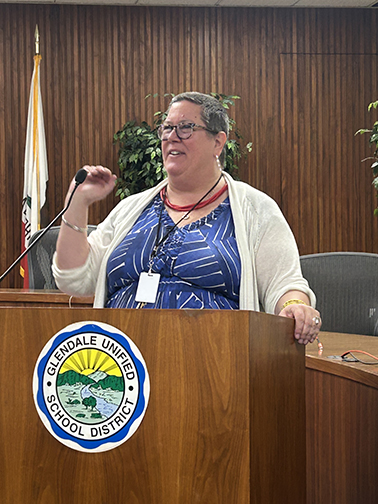
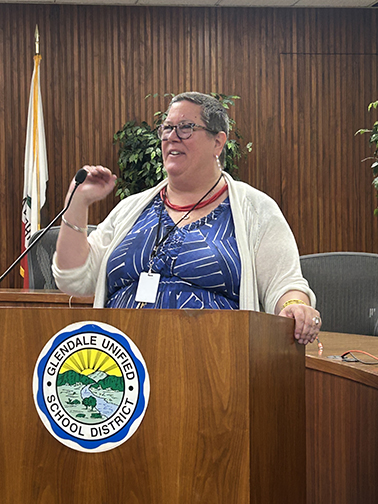
GUSD candidate
Greg Krikorian
Q: With recent student tragedies experienced in the foothill schools and growing academic stress, how do you think the school board and district can partner with the community to help students?
A: While we focus so much energy and time on improving the education standards in our schools, as we should, at times we forget the importance of direct communication with the students themselves. It is our responsibility, as trustees of our local schools, to make sure our students and staff have a safe and healthy experience in K-12. If re-elected, I plan to continue to support our CV Drug and Alcohol [Prevention] Coalition along with the support of Prom Plus and coordinating meetings with parents that will look at additional afterschool programs, a focus on the arts and athletics, and providing various avenues for students to easily reach out and connect with School Board Members and healthcare providers. We need to create a sense of urgency on the Board and work with the community to help the students directly, without neglecting them or allowing unnecessary bureaucratic hurdles from slowing down the process.
Q: The relationship with GTA has been strained at times. What do you think should be done to improve the teacher/district board relationship?
A: One of the challenges we continue to face is the increasing expenses associated with staff salaries and benefits. Ninety percent of our expenses are dedicated to salaries and healthcare benefits that are draining the resources we could be pouring into the classroom. Naturally, that creates a conflict with the union.
A: School Board Member, I am responsible for striking a balance between the interests of teachers and students. If we had the available funds, I would be an advocate for raises to all our educators. But right now, my top priority is to advocate for students first.
That being said, I am also responsible for GUSD staff members that serve our students and are trusted with their education and safety. My wife Christine is a substitute teacher in Burbank, so I am well aware of the great responsibility bestowed upon our teachers. It’s time to work together and strike a balance based on practical solutions and the greater good of the students and GUSD.
Q: What do you feel are the strengths of the foothill schools?
A: For over 15-years, it has been amazing to see the level of dedication and involvement from families with students attending foothill schools. The schools in the area greatly benefit from their involvement and active participation. I am also aware of the passion foothill residents place in sports and arts programs at local schools. When the School Board helped create Crescenta Valley High School’s new track and field, I had the opportunity to meet with coaches, parents, and students who showed me the involvement each resident has in their community. The greatest strength of foothill schools is rooted in the values of the families in the area that are grounded in school safety and participation.
If I am re-elected, I will continue to proudly represent our
schools and the foothill values that are such an import part of the Glendale Unified School District.
Glendale City Council
candidates
Q: Many in the Glendale portion of the Crescenta Valley feel neglected by the City of Glendale. What solutions do you propose to bridge this divide?
Rick Barnes: I work in the entire city and what I will do as our City Councilman will be to bring the north, south, east and west neighbors together immediately to an open meeting, in central Glendale, together and see how similar our problems are and neglected by the current Council and city staff members.
My walking, talking and listening has really brought to focus the very similarities we are all seeing from the lack of interest by Council. I see this as a quarterly meeting in each area of Glendale with residents coming to be introduced to the various areas and experience the true quality of Glendale and differences and similarities. Then make decisions as residents. Not just HOAs.
The residents will place their values together for a true input.
Jefferson Black: I’d like to hear in detail how you feel neglected. I’m guessing among others it’s the missing infrastructure dollars felt also at Adam’s Hill. My street is cracked, broken and Frankenstein-patched. None of our streets have been repaved/improved in almost 20 years! Calls to the city get vague non-answers.
Since the 1980s, southern Glendale has felt let down by the City Council. They’ve unfairly transformed many of our neighborhoods into urban eyesores. Almost every assisted housing project has ended up here in Southern Glendale. The City Council has burdened us with compounding density by letting R1-restricted single family residence neighborhoods become re-zoned to allow rag-tag rum-dum looking apartment/condo monstrosities that follow no uniform code. Builders have overbuilt and condominium-ized what used to be lovely single-family homes.
Infrastructure dollars need to return to the property tax payers’ neighborhoods and surrounding areas. Instead, the city is chasing its tail in debt, paying exorbitant pension obligations and enabling GWP to keep afloat by borrowing high interest bonds.
Dividing Glendale into districts will provide each district with Council representation. Perhaps that’s a good idea for candidates like myself (living in an under-represented area), but I don’t know if residents would embrace that idea.
I think there needs to be more and better communication between Crescenta Valley residents and City Hall. Citizens writing their council members and voicing their concerns at the Tuesday night Town Hall style meetings would be a great start.
Sam Engel: This is a complicated question that deals both with geography and temperament, both of which help shape the attitudes about the Crescenta Valley.
CV residents want to feel that they are receiving the same treatment and services that residents in other neighborhoods receive. Yet, at the same time, residents repeatedly argue that the Crescenta Valley is a unique area, and should be recognized as such. After growing up in the area and then working for the city for past 23 years, I understand this dichotomy. To that end: I will work to ensure that City services match the CV community’s expectations as much as is practical; we will encourage City departments to communicate with residents about their services and projects, and to receive feedback; I will encourage the City to partner with other agencies to more efficiently deliver services; service levels should be measured periodically for effectiveness.
Edith Fuentes: Better communication and coordination. There’s got to be a way we could bring city hall in your neighborhoods back into the picture. If the residents are not able to come or access city hall, we should be able to get city hall to them. Some ideas – dialogue; make city hall part of regular neighborhood meetings; invite city department or staff to make presentations; attendance at neighborhood events, no matter how big or small – participation. I will also recommend “NICE” programs – Neighborhood Improvements via City/Code Education. Residents must be given a chance to share their “vision” of where and what they want their community to be. Good planning starts with a community vision, not the politicians’, not department heads’ or staff’s vision. City Hall must facilitate and help the community to get where they want to go, not tell them. Let’s start “bridging the gap!”
Mike Mohill: If elected on Council, I would preserve the sense of family and community that is so widespread in Crescenta Valley. I would emphasize preserving the unique location and environment that La Crescenta has to offer. I would encourage this City, with the voters’ approval, to place on the ballot to have council districts so that Crescenta Valley will always be represented on the dais.
Having lived in Glendale over 58 years, regularly attended local government meetings, and provided much public commentary, I understand Crescenta Valley/Glendale’s problems and opportunities, and how open communication and process involvement can clarify the real issues and identify our best options.
Herbert Molano: When the mountain doesn’t come to you, we need to come to the mountain. I’d suggest that we have at least one city council meeting every quarter at a location where the local community of the Annex and Montrose can attend easily. The focus of the meeting would be on issues dealing with the area and those that deal with the city’s effectiveness.
The additional outreach and engagement should be tied to clear objectives for areas of improvement, from additional steps to prevent future mudslides, to road and infrastructure repair, to traffic and pedestrian issues.
Zareh J. Sinanyan: I realize that there is a degree of neglect that the residents of the CV portion of Glendale are experiencing. In order to remedy the situation, I would conduct periodic town hall meetings at a CV venue, to make sure that I was in tune with the needs of the community, and make sure that the concerns of our residents are not left unattended. I would also make sure that a sufficient number of commissioners are appointed from the CV area in order to bring a balance to the boards and commissions of the City.
Q: The city attempted to implement a road diet along Honolulu Avenue to give bicycle-riders more freedom and a protective buffer zone against oncoming cars but the proposal failed. Yet in order for the city’s bicycle master plan to be effective it will need to have a network in the Crescenta Valley. What is your position on Glendale’s bicycle master plan and how does the Crescenta Valley fit into that?
Rick Barnes: For 35 years I was getting clients happily involved in the Crescenta Valley in my real estate profession. Schools were always first priority to newcomers, [then] location, various neighborhoods, the four seasons, fresh air, safety in the areas found in the Crescenta Valley.
I own properties in Crescenta Valley and I was very disturbed by City Council’s lack of informed actions. Council has no rights without accountability to us, the residents and businessowners. Closing any street must not occur. The master plan must be evaluated again to the topographical, road widths, traffic patterns at all time zones and then openly notify all residents, businesses to prove the necessity of completed and sound plan for all residents to review and approve.
Jefferson Black: Implementing Glendale’s aggressive plan won’t happen overnight. It’s a daunting project. California will never be as bike friendly as many cosmopolitan cities across Europe – we’re too sprawling, hilly and have a different dynamic. But there is a legitimate place for bikes/bicycling in Glendale’s future. I’m ecstatic that such lofty plans are being made. Regarding Crescenta Valley and biking, it needs to be phased in with an awareness campaign. Safety should be number one, for bicyclists and pedestrians as well.
Sam Engel: The City’s bicycle plan is a start towards integrating bicycling as a routine mode of transportation, and needs to be a standard part of our community’s mobility planning. There are some common sense modifications that need to be made to the current plan: For the plan to be successful, our routes have to be integrated and interconnect with the bicycle transportation routes of surrounding cities; bike routes need to align with people’s transportation needs and primarily focus on work commuting and errands, with a secondary emphasis on recreational cycling; bike routes need to be aligned so that bikers are safe in traffic, steep grades are avoided whenever possible, and there is minimal interface with motor vehicular traffic.
In the Crescenta Valley, we need north/south feeder connections to east/west arterials that connect Tujunga to La Cañada (then Pasadena), and a north/south arterial to Glendale and downtown L.A.
Edith Fuentes: Failed, yes it did. More studies and analysis must be put into this plan. It was done “hurriedly.” When streets are narrow, heavily traveled and you give bikers a “false sense of security,” that is wrong. You put their lives in danger and you put others at risk, too. Not much thought and common sense were put into this proposal. Drive around and you can see those narrow, busy and congested areas where “bike lane stamps” were put on the road – they are not acceptable to anyone who can see and recognize danger.
I will support initiatives that are carefully studied, analyzed and well thought out. More comparative studies with other successful cities will be of help. Crescenta Valley definitely needs to network, connect and be linked!
Mike Mohill: I am not in favor of the city’s bicycle master plan as it was presented to council. I am in favor of bike lanes as long as the road is wide enough in order to have a buffer between the bike riders and the automobiles. I am very concerned about the safety of the bike riders. Also, I would not be in favor of impeding traffic which would create congestion on major thoroughfares.
In order to have a proper network, I would encourage the city to find ways to connect throughout the region so as to ensure safe bike lanes.
Herbert Molano: The bicycle plan requires greater community support and buy-in from the various neighborhoods that may be impacted. Since most biking takes place on weekends, a gradual accommodation could be experimented on days where there is less traffic congestion. A bicycle master plan that does not include the issues of different street widths, fast traffic, and times of the day when there is congestion will be ripe for opposition and divisiveness.
Zareh J. Sinanyan: I like the idea of the bicycle master plan. However, I am against imposing the plan on those parts of the City which may not necessarily find the plan to their liking. We cannot have a plan which does not take into account the interest of the residents of those areas which are impacted by the plan. Furthermore, I would balance the urgency of the other problems facing Glendale, the limited resources available, and the importance of implementing the bicycle master plan at this time.
Q: In your own words, what does the Crescenta Valley mean to you, how does its continued prosperity matter to Glendale at large, and what kind of future do you envision for it?
Rick Barnes: Crescenta Valley is a separate stand alone community that shares values with Glendale. The taking away of Foothill Boulevard by special interest groups have left many residents [having to travel] out of the area for personal needs, restaurants, shopping and medical services.
We need to keep our residents here by increasing the quality of stores that will keep us here and spending our money. How do we improve without sales tax revenues directly related to the boulevard?
This is a very special valley; let’s start talking to each other and put the boulevard as a priority to bring our residents back here. Stop placating to old outdated special interests.
A vortex of energy is here; we must open and make it ours. I am very optimistic of our separate community here. Good people want to move here and make it a home to live and grow without going to Pasadena, etc.
Jefferson Black: Your area of Glendale is magnificent. La Cañada and Montrose sections are gorgeous, clean tranquil neighborhoods – they bring nostalgia for what I imagine Glendale felt like in the early days.
I’d like to reduce City Hall’s red tape to lure film-makers away from Canada and back to California – particularly Glendale. Your community boasts very attractive film locales. When a film crew sets up shop for three months, the city benefits from all the licensing/rental fees, and the crew pumps millions of extra dollars into the community.
Improvement could include installing safe crosswalk/foliage designs; updating antiquated traffic lights; not re-zoning neighborhoods low in density and putting infrastructure funds back in the neighborhoods.
The prosperity of the Crescenta Valley is vital for all Glendalians. In my opinion, if you suffer we all suffer. Every community in Glendale should be treated fairly. The City Council shouldn’t be neglecting or showing favoritism to any one area.
Sam Engel: The Crescenta Valley has a history that links it with the different foothill communities, yet binds it with the greater Glendale community. This is what makes it unique among Glendale’s neighborhoods. The character of these unique neighborhoods must be maintained, whether they be the older enclaves in the center of old La Crescenta, or the neighborhoods built into the canyons of the Verdugos. This, and the quality of local schools, is the attraction to La Crescenta. Thus, the continued prosperity of the area is built upon three factors: Preserving and protecting the residential neighborhoods, so that property values are enhanced; developing and promoting small businesses that can serve residents of the foothill communities; encouraging small businesses and cottage industries that attract shoppers from outside the foothill communities to come and spend money.
When we do this well, the Crescenta Valley prospers, as does the overall Glendale community.
Edith Fuentes: Home! Crescenta Valley has been home to me since 1995. I live, work and play here. I breathe here, every single day – that is why I am very active as block team captain of our Neighborhood Watch and church groups. CV’s continued prosperity means pride and joy to me, and the city as well. I see CV as a thriving, vibrant community, not from “behind” progress notion, but from a community that is “unique,” like other unique areas in Glendale.
Change is inevitable and we have to go with change. We could preserve and maintain some of our unique features. CV is like home away from it all, but yet, you’re really in it. I’d love to see us become more of a destination place. Let’s have a CV community festival, picnic, get-together, and other unity events that will attract people here! I deeply care for this community because – “What matters to you, is important to me. And what’s important to you, matters to me.”
Mike Mohill: To me, Crescenta Valley means small town USA. It should be preserved with minimal development that should not impact the quality of life of its residents. If elected on Council, I would recommend landscaping Foothill Boulevard with trees and repaving the streets. I would encourage small businesses to thrive by lowering their permit fees and by reducing their water and electrical rates. I would repeal the outdoor dining fee and would not impose any new fees.
Residents deserve a genuine voice in determining Crescenta Valley’s future.
I am determined to preserve and enhance what Crescenta Valley has from Whiting Woods to Montrose for the long term by not allowing over development.
If elected as a member of the City Council, I will focus my efforts on the issues that most directly benefit our residents.
Herbert Molano: The hillsides and steepness of so many neighborhoods makes the area unique and apart from the issues of the rest of the city. We must respect the lifestyle that has evolved in different parts of the city that gives choices to residents. We must upgrade nearly all the infrastructure of the area, from roads to what’s below the roadways. Homes of many of the elderly property owners are in need of repair and maintenance and the city could align programs for youth employment with many of those needs.
Code enforcement should become more a matter of assistance instead of threats to compliance. Significant quality-of-life measures must be performed and reported on annually to ensure that issues such as crime hotspots and youth exposed to drugs can be addressed quickly and effectively. We need to know how to identify the unmet needs of youth and older folks with programs that address the unmet needs. We must be supportive of small businesses that want to maintain the character and style of the community.
Zareh J. Sinanyan: CV to me is a part of Glendale, albeit a unique part in the sense of its geographic isolation, but Glendale nevertheless. It’s continued prosperity means Glendale’s own continued prosperity for we cannot have one without the other.
I envision a CV that is vibrant, dynamic, keeping up with the times, yet keeping its unique residential identity. I see CV as a place where the residents still feel like they are in control of their own destiny and can maintain the type of lifestyle that they want to have.
The Incumbents Respond
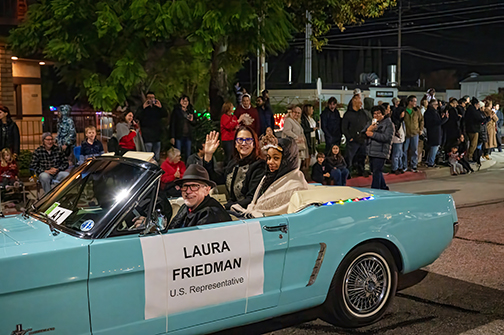
Laura Friedman:
Q: Support for the arts was at the forefront of your 2009 Glendale City Council campaign. With the end of redevelopment funds, how can Glendale continue attracting an arts community and culture and why is this even important?
A: Having a city with a strong emphasis on arts and culture enriches our residents’ day-to-day quality of life. The arts shows young people how to express themselves in healthy ways, and provides them with a creative outlet.
From a purely economic viewpoint, integrating the arts into our city helps create a vibrant environment which draws visitors from outside Glendale, and gives our residents more incentive to spend time and money within Glendale. In addition, the creative industries are an important economic engine in our region, and the creative people who work in these industries are more likely to want to live, dine and shop in a city which prioritizes the arts.
The City of Glendale now has an urban arts fund which is supported by fees imposed on large developments. This fund can help support the Alex Theater, install public art, and support Glendale’s arts related non-profits.
Smart investments in the arts will pay economic dividends back to the city as more people will be drawn to spend time and money in Glendale, and I am committed to making sure we fund those investments.
Q: What are some of the projects that you have supported or spearheaded to improve quality of life in North Glendale? What does the Crescenta Valley mean to you, how does its continued prosperity matter to Glendale at large, and what kind of future do you envision for it?
A: The Crescenta Valley is a special and very important place because of its history, its tight-knit community, its open spaces and parks, and its small-town feeling. It is one of the greatest assets of the City of Glendale – a place that makes us different and which has a tremendous amount to offer residents and visitors.
I was a supporter and participant in the North Glendale Community Plan, which allowed residents and other stakeholders to have a meaningful say in zoning, design and other changes which will help shape the future of North Glendale. The City’s new planning blueprint for North Glendale will help preserve those qualities that make the Crescenta Valley special, while protecting the area from overdevelopment and out-of-scale projects.
I have been a vocal opponent of the 710 extension project, which is a huge threat to the quality of life in the Crescenta Valley. I have supported the efforts to restore Deukmejian Wilderness Park and Le Mesnager Barn. I support the future transformation of Rockhaven into a community center and home for Crescenta Valley non-profits. I meet monthly with both the Montrose-Verdugo City Chamber of Commerce and the Montrose Shopping Park Association to make sure the voices of our businesses are heard. I am currently involved in the streamlining of our business permitting so that we can be more flexible and helpful to our small businesses. I have fostered greater communication between the residents and businesses of the Crescenta Valley and the Glendale City Council.
I consider representing the interests of the Crescenta Valley to be one of my greatest responsibilities.
Ara Najarian:
Q: Your anti-710 extension position is well know. Do you see any of your opponents as being committed to you in this fight? Secondly, what would residents who stand against the freeway lose if you should lose your council seat?
A: Until only recently, the other candidates for Glendale City Council were largely silent on the issue of the 710 tunnel. (Except for Laura Friedman who supported the City Council’s resolution opposing the tunnel last year.) I believe that the publicity surrounding my fight to stay on the MTA board, and my willingness to sacrifice that seat by continuing my opposition to the 710 raised their awareness. After they became aware by reading newspaper reports (i.e., CV Weekly) and observing a few forums concerning the 710 extension, they became more educated and informed. During a

















If I were to lose the election for city council, I would automatically lose my seat on the MTA board. My likely replacement would be a councilperson from Santa Clarita, Lancaster or Palmdale. I can assure you that no one from any of those cities understands the dangers of the tunnel or has any objection to the tunnel being built. In fact, some elected leaders of those cities are pushing for a second tunnel connecting Palmdale to La Cañada! There would therefore be no one at the MTA asking the tough questions about the environmental, traffic and financial problems that the tunnel would bring. The day I step off the MTA board would literally be a day of celebration for the pro 710 tunnel forces.
Q: What are some of the projects that you have supported or spearheaded to improve quality of life in North Glendale?
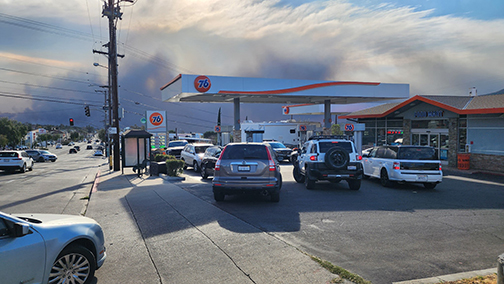
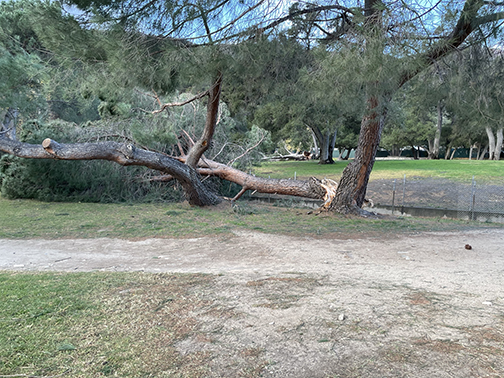
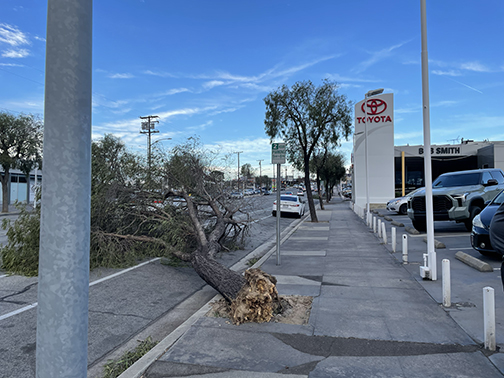
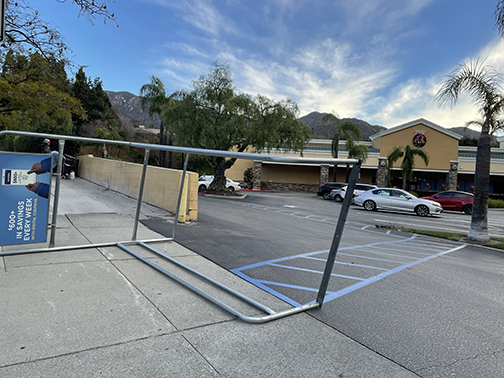
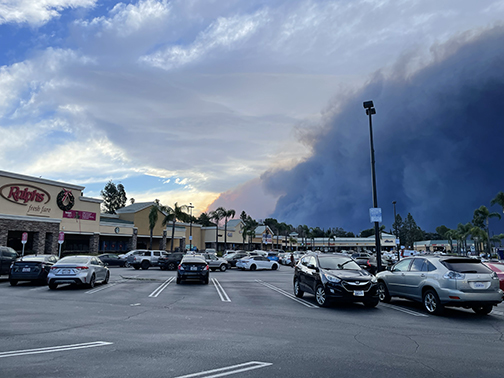
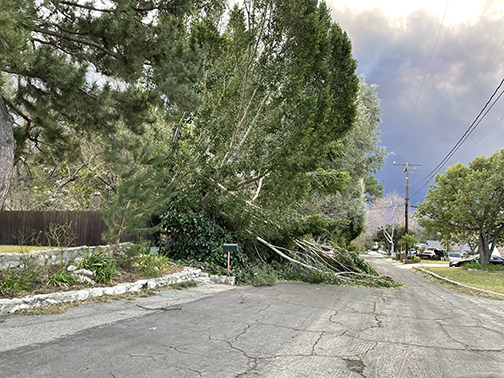
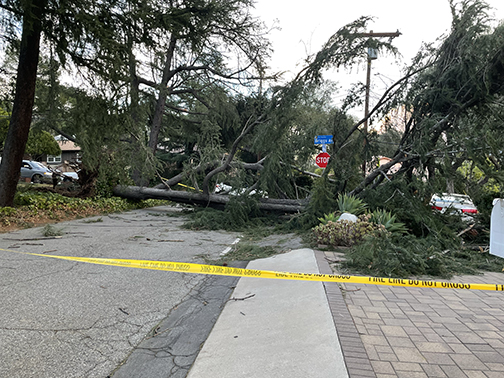
A: With regard to improving the quality of life in the North Glendale/ La Crescenta area, I have supported the rebuilding of the Le Mesnager barn at Deukmejian Wilderness Park. I worked to bring the Trader Joes market to Montrose. I have stood against the development of a large housing development and school construction in the Mountain Oaks neighborhood. I approved the formation of the North Glendale Community plan and made sure that community stakeholders had a seat at the table when the recommendations were being made to planning staff. I made sure that during the natural disasters that struck the Crescenta Valley recently – the Station Fire 2009, floods 2010, and windstorms 2011 – that all the necessary resources from the city such as police, fire department public works and GWP were immediately on the scene ready to give aid and to protect the life and property of our residents. I was involved in the purchase and protection of Rockhaven for future use as a community center ands possible museum and historical society location.

The Candidates Respond added by CV Weekly on
View all posts by CV Weekly →