

I think we are bound to, and by, nature. We may want to deny this connection and try to believe we control the external world, but every time there’s a snowstorm or drought, we know our fate is tied to the world around us.
Alice Hofmann – American, author of children & adult books
Without water, we cannot survive. Without the tools needed to understand the patterns of water availability, it is difficult to make decisions about how to manage water and provide resources to regions that need it most. On the Navajo Nation in the four corners area of the southwestern U.S., water is very scarce and variable, and drought is pervasive. NASA’s Drought Severity Evaluation Tool (DSET) became a shared project with the Navajo Nation. DSET is unique in seeking to understand how indigenous knowledge and western science can be viewed side-by-side. It is a web-based drought reporting tool co-developed between the Navajo Nation Dept. of Water Resources (NNDWR) and WWAO.
A little about WWAO:
- The mission of NASA’s Western Water Applications Office (WWAO) is to help solve the most important and pressing water issues faced in the western U.S. today.
- WWAO is a NASA program based at the Jet Propulsion Laboratory in Pasadena.
- It delivers NASA’s remote-sensing data, expertise and tools directly to water decision makers who can make use of them across the western states and water basins.
- The program is part of a larger effort within NASA to forge an “applied science mindset” that maximizes the best of the best – both scientists and lay people.
The drought reports combine satellite data, modeled inputs and in-situ data from the Navajo Nation in a web-based platform, which harnesses Google Earth Engine. Presently the Navajo Nation gathers data from 85 rain gauges and three satellites from NASA’s Western Regional Climate Center. The various drought tools used are the result of a partnership the NNDWR, the Desert Research Institute and NASA’s WWAO.
Even though our Crescenta Valley location and tribal lands of several distinct communities come together to make up the U.S. Southwest, their climates are very different. Their rainfall comes during the summer months. Coming up from the south, it is torrential, warm and of short duration classified as monsoonal. Our rainy time is more predictable and falls during the winter; arriving from Alaska it is much colder.
Our rains may differ in characteristics, but how cool is it that we join together to study them? The NWS folks are watching a rain system forming in the northwest. Keep the umbrella ready!
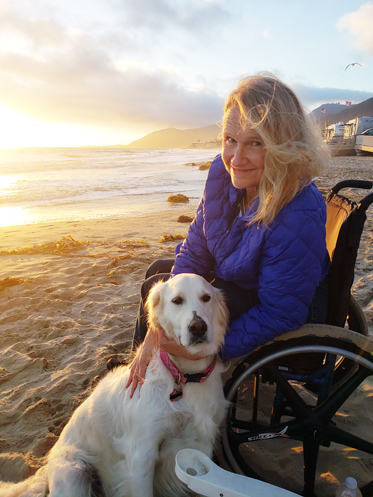
resident and Official Skywarn Spotter for the National Weather Service Reach her at suelkilpatrick@gmail.com.

Weather in the Foothills <<< Sue Kilpatrick added by CV Weekly on
View all posts by CV Weekly →