





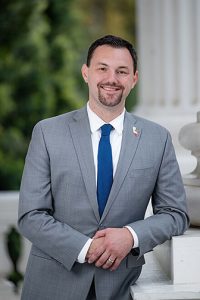
By Mary O’KEEFE
In CVW’s conversation with Assemblymember Nick Schultz the subject centered on housing. He spoke about how the last decade has seen “no shortage of bills” regarding housing, including SB 35 and SB 423.
“And now SB 79,” he said. “I think where we are going, in the course of the last decade, [is that] we’ve seen less and less local control.”
He added that while the state of California has looked at more opportunities to build it has attacked zoning. And although the purpose of these bills/laws is to create more housing that does not seem to be the case.
“We’re not actually building that many more units of housing, so to me I think if we are really serious about adding housing [then] we want to add more housing in places that make sense and in our community,” he said.
Schultz added there are other obstacles to housing production – some that can’t be controlled, like the increase in prices due to tariffs, and supply chain issues.
“These are going to be issues that really do need a federal response but I think we can also look at processing and approval times,” he said. “Finding ways to not necessarily take away local discretion, but speed up the process.”
He added there are several examples of where projects have sat in the “pipeline” for years and that delays have killed projects. If the state wants to add more housing they need to have a “conversation” about permitting times.
CVW spoke to Schultz about the proposed 80-unit building at the northwest corner of Foothill Boulevard and Briggs Avenue. The building would offer affordable housing but there have been many concerns shared by the community that have been directed at the developers, Abode Communities, including fire evacuation and parking.
Schultz had written an op-ed for CVW that covered his approach to building by highlighting some of the bills he sponsored. He said he felt there is a need to utilize vacant and commercial parcels that have the capacity for more traffic, parking, water and sewage.
“Those are the places that I think make sense to add more dense housing in our community,” he said.
He gave examples like the vacant K-Mart site in Sunland-Tujunga and the old Ikea building in Burbank.
“Those are going to have a lot less environmental concerns and there is more infrastructure for it,” Schultz said. “That’s where we should be steering the housing toward.”
He added he needed to have a closer look at the project at Briggs and Foothill but this project is similar to the concerns he had regarding SB 79. There needs to be an understanding of what happens when there is a fire in the foothills and everyone is trying to evacuate. He used the example of those attempting to evacuate from the Palisades Fire when cars were abandoned on the roads and fire engines could not get to the fire. There is a need to have adequate ingress and egress.
“It’s already hard enough to get people down from [neighborhoods]. We really can’t be talking about much more dense housing if were not also talking about infrastructure to get people in and out safely …. I hate to say this but wildfires are now a way of life,” he said.
Schultz also touched on rising insurance rates and insurance companies that are leaving the state but how being more “fire-prepared” could help with insurance costs.
CVW asked about the apparent approach in Sacramento about the “one-size-fits-all” attitude when it comes to housing.
“It has been my experience that people want to live not [just] in buildings but want to live in true communities,” he said. “They want to have that local coffee shop and bookstore.”
He added young parents need affordable child care near their home as well.
“I think that we really need to take our conversation at the state level to the next level. We have to talk less about just adding units of housing and finding a way to build more neighborhoods to enhance our communities,” he said.
In his first year as Assemblymember of the 44th District, he had conversations with stakeholders including community members. He is the chair of the Public Safety Committee and has met with DA Nathan Hochman and law enforcement. In the coming year he plans on having more meetings with law enforcement, fire departments and community members to talk to them about what direction in the future Sacramento can take.

Part III <<< The Conversation Continues … with Assemblymember Nick Schultz added by CV Weekly on
View all posts by CV Weekly →