





When the Wailing Went on All Night
Early one morning in August 1795, Father Vicente de Santa Maria departed from Mission San Buenaventura with six companions. Ten years prior, Fermin Francisco de Lasuén had been appointed head of the Spanish Missions in Alta California. He now sought to fill the 75-mile gap between Mission San Buenaventura and the San Gabriel Mission. That was Santa Maria’s assigned task: to find a suitable location for a new mission.
Many places found along the way lacked water but they soon arrived at the plentiful Rancho of Francisco Reyes. His rancho was located in the northern part of a large valley (San Fernando).
Santa Maria wrote in his diary, “We found this place quite suitable for a mission. It has much water and pine timber close by.”
After some rest and a meal, the search party continued. A short distance away they came upon a good-sized rancheria, or village of indigenous families. These people cared for Reyes’ fields of corn, beans and melons but avoided the unpleasant conditions and captivity of the Spanish system because of their distance from the missions.
The party then investigated Jose Maria Verdugo’s Rancho San Raphael. The group camped there overnight but determined the area was too close to Mission San Gabriel. The next morning was Aug. 25 and urgent word came to Santa Maria that a small child had fallen terribly ill at the Indian village of Tujunga. The six quickly made their way there.
Arriving in Tujunga, a young Indian girl was found to be in very poor health. Father Vicente baptized the child and named her Mary. The group noticed that the village residents, who for hundreds of years had been hunters and gatherers, were cultivating the land on their own account. Although Spanish influence had touched their lives since the arrival of the Spaniards 26 years earlier, in 1795 the villagers of Tujunga still maintained much of their ancient culture, considered themselves free and independent, and did not welcome that day’s intrusion. In fact, since it was late August, most villagers could have been preparing for one of the Tongva tribes’ dramatic mourning ceremonies.
Always commencing at the end of August their dance of the dead, or weeping dance, began in the evening and lasted through the night. They brought together a large amount of fresh food, baskets and newly woven clothing – anything their dead might require in the next world. They hung these goods on leafless branches set in the ground in a semicircle near a large bonfire.
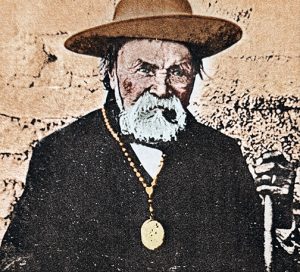
The villagers would come and sit as the sky darkened and mournful wailing would begin. Later they would rise, form a circle around the fire and begin a dance with emotional chanting and wailing that would continue for hours. Every so often, they would pluck an offering from a branch and throw it into the raging fire.
The funeral dance went on without stopping through the night, with frenzied yells and whoops as they leaped in the flickering firelight until dawn. A witness to a mourning ceremony in central California provided a description and it is thought to closely resemble those that took place in the indigenous Tongva village of Tujunga:
The location of the mourning ceremony near the old village was discovered in 1945 and an archaeological dig followed. As you drive down the 210 Freeway and cross over Orcas Avenue in Lake View Terrace, you pass over the ashes of many an ancient bonfire.
The name Tujunga has had many spellings over the years. On Oct. 11, come learn much more about these wonderful native peoples at the 6th Annual Tuxuunga Indigenous Peoples Day. It begins at 11 a.m. at 12400 Big Tujunga Canyon Road in Sunland-Tujunga. It’s free and open to all ages.

VIEW OF THE VERDUGOS <<< CRAIG DURST added by CV Weekly on
View all posts by CV Weekly →