





By Mary O’KEEFE
It is often said that Southern California does not have “weather;” it is either sunny or more sunny. But for anyone who lives here the truth is actually more diverse – and over the last few weeks Californians have experienced quite a bit of “weather.”
The National Weather Service has issued another heat advisory that continues through today, Thursday, at 8 p.m. This warming follows the rain that Hurricane Maria brought to the area over last weekend.
Since Tuesday of this week at 6:30 p.m. the Crescenta Valley area had received 1.52 inches of rain with the outside humidity of 49%, according to the house weather station of La Crescenta resident Gregg Inboden. (See the weather column on page 2 for an introduction to his weather station).
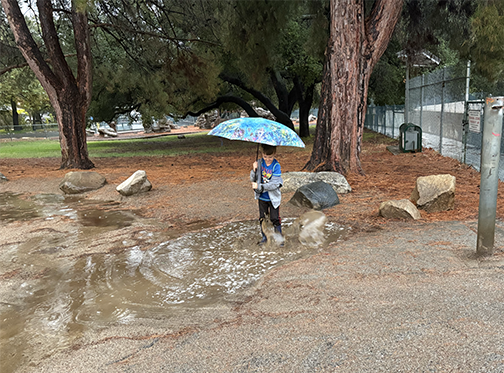
Although the weekend rain canceled some outdoor events, many kids – and adults – took advantage of the warm rainstorm by splashing in puddles and just walking in the rain.
Southern California may see more rainy days as the predicted large El Niño continues to be monitored by climate scientists in the Pacific. Models still indicate a large El Niño will be affecting the Pacific Ocean through February, 2027.
“The odds are still tilted toward a wetter than normal [season] during our El Niño year,” said a NOAA Oxnard spokesman.
It is difficult to exactly predict this El Niño will bring a lot of rain but scientists are seeing the ocean temperatures rise.
“It is really warmer than normal ocean temperatures. The latest [information] for the part of the Pacific along the equator we monitor is 1.8 degrees Faranheit above normal,” said NOAA spokesman.
It does appear that warming will reach 2 degrees above normal sometime next month which will indicate a very strong El Niño, said the spokesman.
“During El Niño, trade winds weaken. Warm water is pushed back east, toward the west coast of the Americas.El Niño means Little Boy in Spanish. South American fishermen first noticed periods of unusually warm water in the Pacific Ocean in the 1600s. The full name they used was El Niño de Navidad, because El Niño typically peaks around December.El Niño can affect our weather significantly. The warmer waters cause the Pacific jet stream to move south of its neutral position. With this shift, areas in the northern U.S. and Canada are dryer and warmer than usual. But in the U.S. Gulf Coast and Southeast, these periods are wetter than usual and have increased flooding,” according to NOAA.
Whether there is a wet, or not so wet, El Niño season now is the time to make sure homes and vehicles are prepared for rain, and rain boots and rain coats are at the ready.

Splashing in Rainy Day Puddles added by CV Weekly on
View all posts by CV Weekly →