





AB 690: A Long Overdue Reform of California’s Privatized Public Defense Systems
Last year I introduced The Fair Representation Act, a bill that provides basic guardrails for California’s unregulated, privatized public defense systems. Under our current system, people’s liberty is placed in the hands of a for-profit private attorney or law firm instead of a traditional public defender’s office. The bill passed the Assembly last year and is headed to a vote on the senate floor. I would like to explain why it is an urgent first step toward solving this problem.
California’s public defense system has long had a caseload crisis but in counties that operate under privatized “flat-fee” contract systems, where for-profit lawyers or firms are paid a fixed amount for limitless cases, that crisis is extreme. A new report by the Wren Collective and UC Berkeley Criminal Law & Justice Center uncovered lawyers operating under these contracts with 500 to 600 cases a year.
Numerous other states from Michigan to South Dakota have banned flat fees for public defense and the American Bar Association has long warned against using them. Empirical studies from around the country, including California, have shown these systems drive incarceration higher. Of the eight counties in California with the highest per capita jail and prison incarceration rates, seven use flat fees exclusively.
Reasonable people have expressed the need for state funding along with reform and I agree that for California to truly solve its public defense crisis it can no longer be one of only two states that provides no consistent funding for trial-level indigent defense. That is why I am proud to serve the new non-governmental California Independent Commission on Public Defense, which seeks to build a framework for that exact funding. But operating systems that drive costly incarceration higher do not save money.
I appreciate and understand the concerns of counties where balancing budgets is a constant battle. This is why I have amended the legislation to, in most respects, provide guidance and not rigid requirements for county systems as well as allow counties to continue some of the same contracting practices for all but the most complex cases, provided basic safeguards are met.
But these safeguards should not be controversial, like allocating enough resources for each lawyer to “ensure competent representation” or requiring private attorneys who handle public defense cases to have a working telephone number for clients and their families or banning outright the widely condemned practice of making essential resources for defense investigators come directly out of the attorneys’ fees, creating a hopeless ethical quagmire where attorneys’ decisions on whether to pursue an effective investigation directly impacts their bottom line.
And counties should not get a free pass at underfunding their systems. As a state, we spend about 80% more on prosecution than public defense. In exclusively flat-fee counties, that disparity is 159%. Yet those same counties end up spending over 17% more per capita on detention and corrections than counties with a traditional public defender’s office. That 17% increase is of a far bigger piece of the budget pie than public defense – typically six times more.
Seventy percent of these counties have seen their jail or prison incarceration rates increase over the last decade – at the same time the state as a whole has seen a 29% drop overall, consistent with national trends. These increased costs are also being passed up to the state, as 74% of these counties have a higher than average state prison incarceration rate. Saying reform is too expensive ignores the far greater costs of needless incarceration, as well as the human costs.
Tackling California’s unregulated privatized public defense system is long overdue. The Senate should pass AB 690 and I will continue to work with counties for state funding to help bring our system up to code.
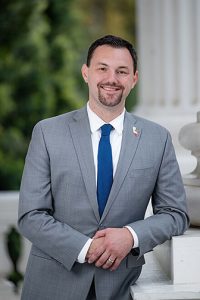

NEWS FROM SACRAMENTO <<< ASSEMBLYMEMBER NICK SCHULTZ added by CV Weekly on
View all posts by CV Weekly →