





Angeles Forest Protective Association
The name sounds a little ominous to me, like maybe its members track down and hang litterers or they’re a group of eco-terrorists. But that couldn’t be further from the truth. In fact, in the 1920s it was a band of Crescenta Valley amateur wildland firefighters who volunteered their services before the advent of organized wildfire suppression. I’ve written about this before but it’s worth revisiting.
I’m on this thread because of the death of my fellow historian and friend Art Cobery. I’m going through Art’s trove of written history and came across his article on “The Mysterious Mountain Cabin.”
In his younger years, Art hiked all over the San Gabriel Mountains above us. He was always intrigued by an old stone cabin surrounded by mature pine trees, perched high on a terrace on the backside of Mount Lukens – an area named Grizzly Flats. What was its origin and purpose? Art later discovered that it had been the home base for the Angeles Forest Protective Association.
At the turn of the 20th century (and earlier), forest fires were not as common as they are today. However, when they did burn they smoldered unsuppressed for months at a time because so few men turned out to fight them. Sometimes those wildfires burned down into the ranches and farms of the valleys below, including the Crescenta Valley.
In 1916, residents began to loosely organize to protect themselves against these fires. But in 1923, they formed the more organized Angeles Forest Protective Association. At its head were two men: Art Aiken, an experienced firefighter and a pioneer in the field of reforestation. The other was Harvey Bissell, the heir to the Bissell Vacuum Cleaner fortune. With his wealth, and a huge dose of community spirit, Bissell was able to fund the new association.
They organized a group of young men, salted liberally with old hands, and drilled with military precision. The call to arms was a large bell mounted and rung at Bissell’s ranch at the top of La Crescenta Avenue. Bissell bought the crew a new truck to carry equipment, the equipment being simple shovels and back-pumps (a water canister backpack with a hand pump).
Next they built a cabin high up in the mountains for their headquarters. (This was Art’s “mysterious mountain cabin.”) In 1925 they employed mules and backpacks to carry cement and building supplies up the ridge of Mount Lukens and down to Grizzly Flats. Here at the new cabin they held regular meetings attracting over 100 people, held training sessions, seasoning the new recruits with the long hike. They also set up a tree nursery to provide seedlings for reforestation after fires. The area around the cabin was liberally planted with pines that quickly grew to maturity.
The Association only lasted a short six years until the County took over wild land firefighting duties in 1929. And sadly the volunteer fire crew’s final stand in 1928 was a failure. A blaze pushed by strong Santa Anas swept across the valley and right over the Association’s crew, which was stationed at Foothill to block the fire. That fire burned all the way into Burbank.
But the Association had forged strong bonds among its members and they continued to meet fraternally at the Grizzly Flats cabin, all the way into the 1940s when the stone cabin was abandoned, visited by a few hikers like Art Cobery and his friends. In the latter part of the century, the Forest Service was on a crusade to restore wildlands by tearing down old structures in the mountains. We lost Switzer Falls Chapel, all the Mt. Lowe structures, and the mysterious mountain cabin. The forest of trees around the cabin site were left behind but they too succumbed to the Station Fire. They burned to the ground and never grew back.
Thanks, Art, for leaving so much written history as your legacy. On a personal level, Art was a good and true friend to me. I’ll leave you with the words Art instilled in me, words I think of every day, a philosophy of life. Art told me this simple phrase: “Be kind.”
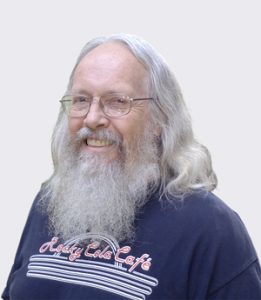
and loves local history.
Reach him at lawlerdad@yahoo.com.

TREASURES OF THE VALLEY <<< MIKE LAWLER added by CV Weekly on
View all posts by CV Weekly →