





A Darker Side of The “Father of Glendale”
Cecilia Rasmussen was the local history writer for many years for the LA Times. She wrote on subjects similar to those that I often cover: crime, cons, murders, tragedies; in other words, the darker side of local history. I admired her for that. This side of history has always appealed to me as it brings the past to life. Historical figures were real people with both good and bad in them. The past was not better; it was just a time that had the same problems as today but without surveillance video and cellphone cameras. In 2008, Cecilia retired from the Times. She went out with a bang reporting the true story behind the so-called “father of Glendale” Leslie Combs Brand. Here are her findings.
Today, L.C. Brand is an icon in Glendale: Brand Park, Brand Library, Brand Boulevard. Mr. Brand came to Los Angeles in the late 1800s when real estate was booming. At the turn of the century he targeted Glendale, at that time a sleepy rural town of 550 souls. Brand partnered with Huntington to bring a trolley to Glendale. He developed a water and power company, and brought telephones to town. And in the process, he made a fortune selling Glendale real estate.
With his wife Mary, he built an incredible mansion called El Miradero at the top of Grandview Avenue. They were childless but had a rich social life. Brand was a flying enthusiast and built an airfield in his front yard. He owned a war surplus fighter plane and used it to get to his ranch in the Eastern Sierra. In the teens and ’20s, he hosted “fly-in parties” where rich people flew their private planes to his Glendale mansion. He rubbed elbows with the rich and famous, and Hollywood elite. He was a player, which leads us to the dirt that Cecilia Rasmussen dug up on him.
Cecilia met with a Judy Brand, who was married to a descendant. Judy told her of a rumor of Brand’s “second family.” Judy connected some dots on this rumor and ended up comparing notes with descendants of Brand’s second family.
The rumor went that Mr. Brand (in his 50s) met a pretty young woman named Birdie on a train ride from LA to Oregon. Birdie was a beauty, a former Miss Nevada. He gave her a job and sent her to secretarial school. He bought her a house and property in Hollywood. He took her to his get-away ranch in the Eastern Sierra. When she turned up pregnant he took her to Tijuana and made her his second wife.
As Judy Brand put it, “I assume at that time of the century it was better to be a bigamist than to bring a bastard into the world.”
Eighteen months later, Birdie had another child. Brand was furious, even accusing her of infidelity (that’s rich). Brand died of cancer just three years later.
A great rumor but Cecilia Rasmussen needed proof in order to do this story justice. The Times ponied up for a DNA test. Both sides of Brand’s double family agreed to participate. When the results came in it was verified that both sides were descendants of the Brand family.
Cecilia wrote up the story and followed it up with a public meeting of the two sides of the Brand family, appropriately held at Brand Library! I was actually there in the audience. When the two sides came together in person for the first time, I think maybe everyone expected a knock-down fight (like on the “Jerry Springer Show”). But actually it was a very cordial meeting. They were several generations removed and there were no inheritances on the line.
Since then, it’s quietly accepted that Brand was a bigamist although it’s not publicized. You won’t find a picture of Birdie and her two sons at the Brand Library. However, what you will find there is a beautiful building over 120 years old, lovingly restored to its former grandeur. Worth a visit!
And worth remembering that L.C. Brand, the “father of Glendale” was just human, and not perfect.
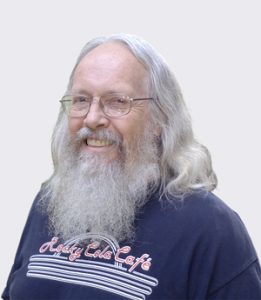
Society of the Crescenta Valley
and loves local history.
Reach him at lawlerdad@yahoo.com.

TREASURES OF THE VALLEY <<< MIKE LAWLER added by CV Weekly on
View all posts by CV Weekly →