





Winding Down the America 250 Trail
The Sunland-Tujunga Bicentennial Trail, developed in 1976, is now the America 250 Trail. In the past weeks, we’ve visited 22 of the 25 locations highlighted on this journey into the past. We’ll visit two more stops today and, following America’s birthday, the trail will conclude with my story of venturing into the wilderness of Big Tujunga Canyon to search for remnants of the Monte Vista Dam, built in 1885. The history hunt is on for this coming week, so wish me luck on my quest and tune in next time for that.
The first place we’ll visit today is very close to my heart. It’s the Verdugo Hills of Peace Pioneer Cemetery at 7000 Parsons Trail in Tujunga – VHC for short. On the occasion of the cemetery’s 100th anniversary, I assumed the position of volunteer caretaker in 2022 … or as I prefer to call myself the project undertaker.
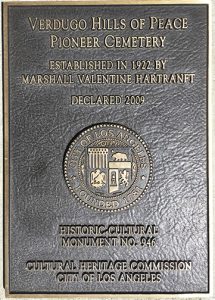
Before sharing the latest VHC news, I’d like to take a moment to thank once again and to present the information passed on from the three historians who originally developed this trail in 1976: Jack Wollard (1924-2012), John Whelan (1914-1982) and Thomas Theobald (1916-2003).
“On May 10, 1922, Marshall Valentine Hartranft gave the northeasterly four acres of Tract 2556 to the Crescenta Valley for a cemetery. A non-profit cemetery association was formed, consisting of Judge Herman H. Breidt, Mrs. Dora Warnick, Mrs. Mary Begue Smith, Wallace Morgan, Amos Kirshman and Dr. Elmer Theobald (Thomas Theobald’s father). In the 1930s, local Post 5387 of the Veterans of Foreign Wars took an active interest in the project and, with work and support, brought about landscaping, a water supply and black topping for Parsons Trail. Many early settlers are buried here.”
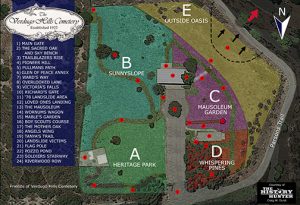
After 104 years, the Verdugo Hills Cemetery will be making its very first appearance in the upcoming Sunland-Tujunga Fourth of July Parade. A handful of supporters will be riding along to enthusiastically wave at all the families out enjoying the day.
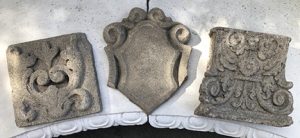
In addition, history continues to be made at VHC. Just weeks ago, three decorative pieces of cement were returned after nearly 50 years. The story that came with the ornamental trio was that they had washed into a yard during the flood of 1978, following the harrowing landslide at the Verdugo Hills Cemetery. (Google it) They ended up buried in a garage until the home was sold and the pieces were rediscovered. We don’t know definitively that they originated from VHC but, based on the fact that they appeared on Hillrose Avenue where the debris flowed from the grounds and they very much look like something that would come from a cemetery, I’m a believer. A display of the items is to come.
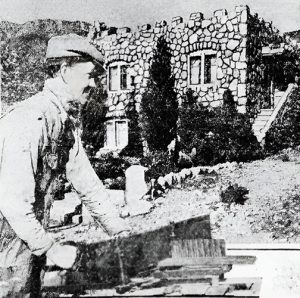
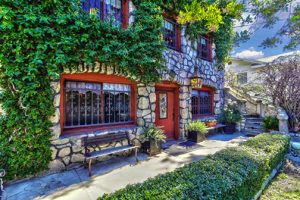
Now we’ll visit the second-to-last of the locations on the America 250 Trail. No. 24 is the Elmer Styles Reavis Home at 10620 Samoa Ave. One of my favorite arroyo stone homes in all the valley, and arguably one of the most beautiful. What makes its story even more compelling is that the builder, Mr. Reavis, was blind. Here is what the trail originators had to say about Elmer’s accomplishment.
“Elmer Reavis, a man totally blind, constructed this two-story rock house virtually without assistance. The house was begun in the early 1920s and completed in 1924. A special feature of the home is the stone fireplace on the lower floor. Mr. Reavis, using a self-made system of levers, ropes and pulleys, successfully placed the 1500-pound center stone above the hearth.”
It’s said that Elmer was fascinating to watch as he felt his way around, using various methods to take measurements, cut lumber and transport heavy stones. While he may not have had much assistance, it seems he was seldom alone as small crowds would often gather to watch the interesting process of this blind builder in action.

VIEW OF THE VERDUGOS <<< CRAIG DURST added by CV Weekly on
View all posts by CV Weekly →