





Stage Barn & Castle on the America 250
The Sunland-Tujunga Bicentennial Trail, developed in 1976, is now the America 250 Trail. So far, in the past weeks we’ve visited 10 of the 25 locations highlighted on this journey into the past. Today, the focus will be on two homes with interesting stories. The first is the A. J. Richardson Home and Stage Barn at 7441 Valaho Drive, then the Blarney Castle at 10217 Tujunga Canyon Blvd., both in Tujunga – #11 and #12 on the trail.
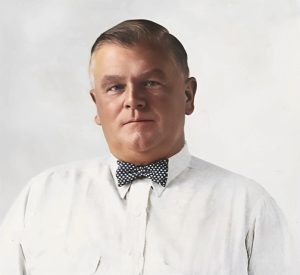
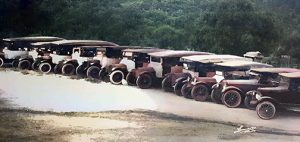
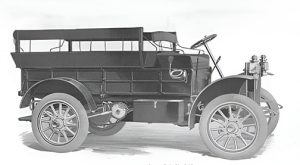
Let’s begin with the following Stage Barn information left to us by the original trailblazers: “The first bus line (called stage lines in the early days) was operated between Sunland and Roscoe (in Sun Valley), where passengers could flag a train for Los Angeles, San Fernando and points beyond. The ‘Stage’ consisted of a horse and buggy, its capacity limited to three, or at most four, persons. In 1910, Marshall Hartranft purchased a Buick pickup, with seats along the sides to serve as the first auto stage. Soon after, Earl Sims bought a Cadillac and established a stage to the Pacific Electric Station at Brand and Broadway in Glendale. In 1917, Sims sold his line to Al Richardson, who then acquired numerous transport vehicles and operated under the name Richardson Transportation Company.”
Allen John Richardson was born near Dublin, Ireland in 1880. He arrived in the United States in 1893 and married Tilly Elsner in Los Angeles in 1907. The two found their way to Tujunga shortly before the stage line was purchased in 1917. The house on Valaho Drive was their home, along with a large barn to house many of their vehicles. The business was flourishing when Tilly passed away in 1926. A. J. continued operating the stage line for another 10 years before relocating to Orange County in the mid-’30s. The line was eventually purchased and operated by the Pacific Electric Company.
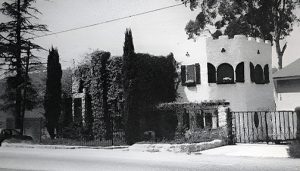
Turning the spotlight now to Blarney Castle on Tujunga Canyon Boulevard. Again, here is the description from the past: “Blarney Castle was built in the early days by Dr. Smith, a lady and a physician. Although additions have been made, it is still apparent that Dr. Smith’s original design was meant to duplicate Blarney Castle in Ireland. Dr. Smith was well-known in the valley and her ability to drive and maneuver her heavy sedan was a wonder to all who observed.”
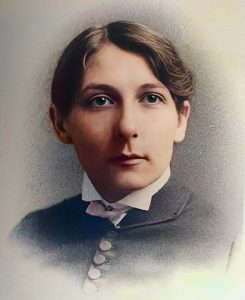
Virginia Tenney Smith was born in Rutland County, Vermont in 1860. During a time when few women even dared to dream of becoming a physician, Virginia graduated from Boston University’s School of Medicine in 1888. After spending some time in Detroit, Michigan, by 1915 she was practicing medicine in Los Angeles. In the early ’20s she began to build a small hospital on the southwest corner of Foothill Boulevard and Hillhaven Avenue in Tujunga. In 1921, she purchased Blarney Castle and moved in. Despite the claim from the past, according to Mary Lou Pozzo’s book “Founding Sisters: Life Stories of Tujunga’s Early Women Pioneers,” a businessman built the castle in 1919, two years before, so it was not Virginia who had it constructed and therefore not based on her memories of Ireland but his.
Mary Lou’s book also tells the harrowing story that follows. One morning, after living in the castle for only two years, and all alone, Virginia awoke and staggered out her back door. Unable to steady herself, she fell and struck her head on a rock. She was found by neighbors, bloody and unconscious, and taken to her own hospital. When she awoke, she was unable to speak and the prognosis was poor. It was determined that Virginia had suffered a massive stroke and her chances of survival were questionable. After just six months, though, she had recovered her speech. Soon she moved away, her medical career at an end.
Surprisingly, she lived for another 26 years, dying in Long Beach in 1949.

VIEW OF THE VERDUGOS <<< CRAIG DURST added by CV Weekly on
View all posts by CV Weekly →