





By Charly SHELTON
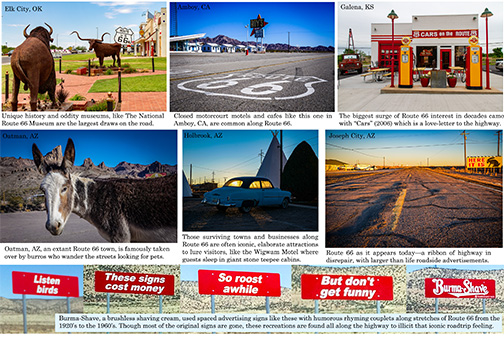
Route 66 is America. One road connecting East to West across this vast continent, weaving natural wonders and ancient pilgrimage sites together with hearty little towns and roadside attractions, with the connecting threads of car culture and needless consumerism. This is America choosing its identity as it came out of The Great War, and further cemented in the post-WWII boom of leisure-seeking and disposable income to spend on vacations, made more attainable to the average family through the advent of affordable cars. As Route 66 celebrates its 100th anniversary later this year, it has seen better days. Bypassed or overwritten by the more direct interstate highway, the original Route 66 – especially here along its western stretch – is now mostly a crumbling ribbon of pavement somewhere off to the side of a faster freeway, scattered with closed businesses and forgotten relics, with the remaining towns catering only to those who intentionally seek them out.
But for those who do seek, they find a way of living and travelling that is all but lost in an age focused on efficiency and arrival rather than the journey itself. Travellers along the true Route 66 today get to experience the soul of a forgotten America, an America that was built town by town, where people still open their doors not because it’s terribly profitable, but because it’s neighborly. An America that asked the weary traveller where they were from and where they were going as polite conversation, not a test-and where no one felt threatened by the answer, an America where diners are places to linger, where conversations with locals aren’t transactional, and where hospitality isn’t a performance but a reflex. These towns have endured the bad times. They’ve watched traffic disappear, businesses shutter, and the interstate carry the future right past their front doors. Still, they hang on-welcoming whoever finds their way off the freeway, because that’s simply what you do.
Route 66 is the America that we hoped we could be and, for a moment, we were.
Photos by Charly SHELTON

ROUTE 66: AMERICA’S MOTHER ROAD added by CV Weekly on
View all posts by CV Weekly →