





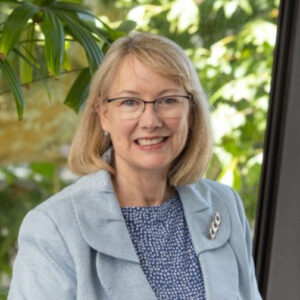
Adria Navarro, PhD
Program Manager
USC Verdugo Hills Hospital
Community Resource Center for Aging
Did you know that November 2025 has offered up a national observance to honor the millions of unpaid caregivers across the country? The term “family caregiver” describes individuals who provide essential care to members of their family of origin, as well as to their family of choice. This year’s National Family Caregivers theme, Plug-in to Care, highlights the importance of connecting caregivers with support tools, resources and supportive networks; a theme that resonates with the services at the USC VHH Community Resource Center for Aging (uscvhh.org/aging-resources). To mark this month’s observance there have been various conferences, webinars and congressional recognition focused on added support and awareness.
Whether or not a person identifies with family caring, s/he will be impacted. Rosalynn Carter (U.S. first lady from 1977 to 1981) famously stated, “There are only four kinds of people in the world: those who have been caregivers, those who are currently caregivers, those who will be caregivers and those who will need caregivers.”
Her efforts have highlighted that caregiving is a universal experience, touching everyone at some point in their lives. The essential services a family caregiver offers to someone who needs support may relate to illness, disability or functional changes with age. Care recipients include spouses, adult children, other relatives or friends who require help with tasks ranging from basic daily activities and errands to managing complex medical care and providing emotional support.
Family caregivers deserve to be honored and supported as they save the country billions of dollars annually. Their unpaid care would otherwise cost billions if it were left only to professionals and outside resources. Specifically, an AARP report recently estimated that family caregivers’ unpaid contributions are valued at over $600 billion per year. This includes services such as in-home care, help with daily tasks, transportation and other forms of support. Caregivers off-load and can prevent more expensive care such as in institutions.
Despite the immense value family caregivers provide, they themselves face significant stressors, including financial burden. The dedicated time they provide often means postponing their own personal needs and activities, such as health care and respite. The financial stress (in many cases) can come from spending thousands of dollars out-of-pocket for caregiving-related needs. One study shows they bear an average annual cost of approximately $7,242. In response to this situation, one bipartisan solution is the proposed Credit for Caring Act, which would help ease this financial burden by providing up to $5,000 in tax credits every year. To date this bill has been stalled in Congress. Support was noted by one congressional member that was quoted, “If you’re living on a fixed income and you’re struggling to survive, a diffusion of $5,000 would make an enormous difference.”
Medicare does not offer reimbursement for family caregivers. It also doesn’t provide payment for long-term care services like in-home care or adult day services. There are a few Medicare Advantage plans that offer coverage for services such as meal delivery or rides to medical appointments, but these are limited.
One local support is a monthly complimentary memory café referred to as Caregivers Night Out. The social gathering is designed for people with memory loss, dementia or cognitive changes and their family, friends or care partners. The aim is to reduce social isolation and provide a supportive, enjoyable environment where attendees can connect with others through conversation and activities such as music, games and arts. A formal diagnosis is not required to attend.
For reservations and more information, reach out to the USC-VHH Community Resource Center for Aging at (818) 949-4033 or email Aging-Resources@med.usc.edu.
Program Manager
USC Verdugo Hills Hospital
Community Resource Center for Aging

National Family Caregivers Month added by CV Weekly on
View all posts by CV Weekly →