





Turkey Day with the Cowboy Who Cared
Jasper couldn’t have been more excited when he stepped onto the street that day. His mind may have been racing with all his recent accomplishments. He’d been noticed on the ball field at the University of Arkansas years before and only days earlier he’d been tapped to join the 1936 Chicago White Sox. Spring training had just gotten underway when fate intervened. As he stepped off the curb into the roadway – “Screeeech, bang” – he was hit and hit hard.
The driver of the car looked back at the damage s/he had done and then sped off, never to be discovered. Jasper’s broken body was removed from the street and taken to the hospital. It was determined that he had suffered severe internal injuries and his back was broken. His left leg had been shattered, broken in seven places. During the 119 days he spent encased in a full body cast, he accepted the fact that his dream of playing baseball in the major leagues was over.
Jasper returned to his father’s farm in the Ozarks to recuperate. There, he would engage himself in the needs of the farm as a way of regaining his strength. His horse-riding skills became exceptional. Somehow he got the idea of heading to Hollywood in about 1940. He planned to pursue a career in western films, utilizing his horsemanship skills. He created the alter ego of Johnny Carpenter as a stage name … and it worked.
He was soon engaged in stunt work, appearing in the film “National Velvet” starring Mickey Rooney and Elizabeth Taylor. He continued doing stunt work until being cast for some bit parts of his own appearing in “The Navajo Trail” and “The El Paso Kid” in the mid-1940s. His roles got better and he would eventually appear in nearly 50 films and numerous television programs as well.
What Johnny accomplished off the screen, though, far surpassed his film success. After suffering heartily from his injuries as a young man, Johnny had a special place in his heart for those struggling with disabilities. In 1945, he gathered some friends and they built a weathered western town on his small ranch located near Griffith Park. He then invited those with disabilities to visit his ranch, free of charge. They came – and in great numbers. By 1970, he had outgrown his small space and sought to expand. He acquired nearly five acres at 9750 Foothill Place in Lake View Terrace and built a much larger western town. The buses and cars arrived and the wheelchair cowboys came smiling in.
Passing through the main gates, visitors saw the Mangy Dog Saloon, a blacksmith shop, and a sheriff’s office. They continued past Canada’s General Store, the Cheyenne Stage Works and the assay office to a big sign which read, Heaven on Earth Ranch. There was a corral with 20 horses and mules, a mess hall, and several large barbecue pits. Johnny’s disabled guests were treated to a bonanza of entertainment, that included horse and stagecoach rides and barbecues at the old chuckwagon while just enjoying the setting of an era long past.
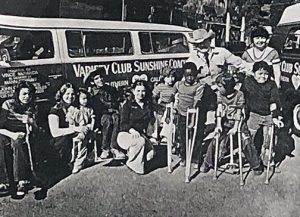
Each Thanksgiving at the Heaven on Earth Ranch, Johnny served turkey dinners to hundreds of disabled children and their families. One November, over 750 people were seated and served a meal with all the fixings. Over the course of 50 years, Johnny believed he had provided love to over 1.5 million guests.
Mayor Tom Bradley commended the grizzled good Samaritan for putting “nearly three-quarters of a million dollars of his own money into his special ranch.”
Ronald Reagan wrote, “Johnny, we Americans owe much to you and the efforts of kindhearted citizens such as yourself.”
The ranch closed in 1994 and Johnny passed in 2003. The epitaph on his headstone at Forest Lawn reads, The Cowboy Who Cared.

VIEW OF THE VERDUGOS <<< CRAIG DURST added by CV Weekly on
View all posts by CV Weekly →