





Bill Bobo and the Valley of Rainbows
“Okay, folks, hop in and we’re off,” Mr. Bobo instructed his weekend visitors. These were prospective land buyers visiting the Crescenta Valley on a Saturday morning exploring the opportunities they’d heard about.
Jumping into the driver’s seat, Bill continued, “I’m going to take you down to a spot of unbelievable beauty where you can launch your new business endeavors with easy access to markets around the globe!”
This was William Lawrence Bobo of Goode & Bobo, a real estate agency active here in the 1920s. Bill Bobo was born in South Carolina in 1866 and, as a young man, he traveled as far west as New Mexico. There he became employed as a teacher for many years. In 1913, at the age of 46, he was wed to Mary Johnson and they moved to Phoenix, Arizona where Bill initiated his work in real estate. In 1921, the two relocated to Tujunga and with James Goode set up the Goode & Bobo real estate agency.
Each weekend, Mr. Bobo would conduct tours of the area highlighting tracts of land for sale. These visitors had loaded up in front of the agency near today’s Foothill Boulevard and Commerce Avenue and headed west down the main drag passing Sunland Park on their way. Soon after riding through a cutout in the road, Mr. Bobo came to a stop in view of a gorgeous valley to the north. (Location today at 9171 Foothill Blvd.) This expanse was known then as Rainbow Valley.
Several oil derricks chugged along then, up into the wash. Their owners had given up on striking any gushers long ago. The wells then only operated on weekends, just in time for the prospective land buyers to come a callin’. Their pumping action was more of a show or an enticement to buy. The big imaginative sales pitch was about to begin.
Mr. Bobo pointed off into the distance and exclaimed, “You see that there? That is the Big Tujunga River; as of now it doesn’t look like much but that is about to change.” He expressed with all sincerity. “You see, now you can get in on the ground level, when prices are low, for they will certainly rise as the new developments ensue.”
“What are those new developments, sir?” asked one eager guest.
“I will explain,” Mr. Bobo replied.
“As you all know, Los Angeles is not a port city. The centers of manufacturing are located near downtown and lack easy access to the markets of the world. Because of this, the city of Los Angeles will soon dredge the entire length of this river from here to San Pedro. Buy the land now and begin building your factory. Soon, the waters will rise and you can construct a wharf – just in time for the arrival of the big steam ships to the Big Tujunga River and Rainbow Valley.”
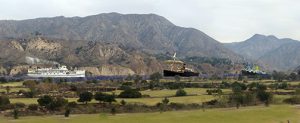
Whether Bill Bobo really believed his story of big ships arriving in the Big Tujunga Wash is up for debate. Was it just a ploy to sell some land or did he truly imagine a day would come when these big ships would materialize? In any case, it’s quite fun to imagine.
With regard to Rainbow Valley, I’ve never come across any description as to why it got that moniker but I can tell you from personal experience that I’ve seen more rainbows there than any place else. I suspect many of you might say the same.
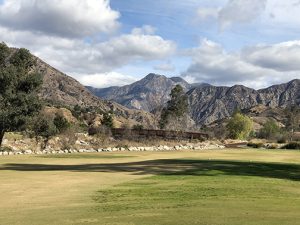
Lastly, framed beautifully at the rear of the view of Rainbow Valley from Foothill Boulevard, far beyond the golf course, stands Condor Peak. This mountain was so named for the dozens of California condors that made their nests near its summit at the turn of the 20th century. These magnificent birds, with nearly a 10-foot wingspan, could regularly be seen gliding over the valley floor below.
But the big ships? They were never seen.

VIEW OF THE VERDUGOS <<< CRAIG DURST added by CV Weekly on
View all posts by CV Weekly →