





Staying Cool is Healthy
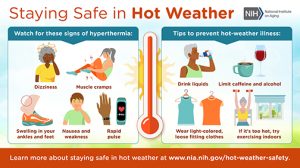
Summer heat has been in the headlines across the nation, reminding us that very hot weather has a serious impact, including heat-related illnesses. Hospital emergency personnel see patients with mild dehydration to those experiencing serious organ damage, and worse.
Hot weather can cause difficulty in the body’s ability to regulate its temperature, which is especially challenging for older adults. As we age, our bodies typically do not adjust as well to sudden temperature conditions and many prescription medicines affect the body’s response to temperature, including the ability to sweat as a means to cool down.
Let’s enjoy the season and avoid hospitalization by recognizing and addressing heat-related conditions such as:
Heat syncope, which is a sudden dizziness that can happen when you are active in hot weather which can be exacerbated by beta blockers. If you feel dizzy, rest in a cool place, put your legs up, and drink water.
Heat cramps are the painful tightening or spasms of muscles in your stomach, arms or legs. Cramps can result from intense exercise in the heat. Rest in the shade and drink water or sports drinks with electrolytes. Avoid alcohol and caffeine.
Heat edema is a swelling in your ankles and feet when you get hot. Elevate legs to reduce swelling. If that doesn’t work quickly, check with your doctor.
Heat exhaustion means your body can’t cool itself properly. Symptoms include thirst, dizziness, weakness, incoordination, nausea, heavy sweating, normal body temperature with cold and clammy skin, and a rapid pulse. Rest in a cool place, drink fluids and seek medical help if symptoms persist. Heat exhaustion can lead to heat stroke, so act quickly.
Heat stroke is a medical emergency where the body’s temperature exceeds 104°F. Symptoms include fainting, confusion, dry skin and an abnormal pulse. Immediate medical attention is necessary, along with moving to a cooler area and cooling the body with cool clothes, baths, showers or fans.
Remember it is important to be cautious and get relief quickly when you are overheated otherwise you may begin to feel sick or risk a heat-related illness that could cause serious health issues.
I invite you to contact the USC-VHH Community Resource Center for Aging if you find you need services and/or support. Consults are complimentary and the webpage has listings: uscvhh.org/aging-resources. Resource Specialists are on hand to listen and research options; call (818) 949-4033 or email Aging-Resources@med.usc.edu.

Program Manager
USC Verdugo Hills Hospital
Community Resource Center for Aging

Adria E. Navarro, PhD, LCSW, FGSA <<< USC-VHH Community Resource Center for Aging added by CV Weekly on
View all posts by CV Weekly →