





From Clean Air To Smog – And Back Again
When I was a kid in the early 1960s, smog was a fact of life. I remember that every summer a thick haze of bitter acrid smog blanketed our valley. When we played in the street, the ends of the street were sometimes not visible. The San Gabriel Mountains were visually non-existent. I still remember the smell of the air during the summer, sharp and sour, a smell so strong you could almost taste it. After a day of playing my lungs ached, my head hurt and my eyes stung.
It was a far cry from what the founders of the Crescenta Valley envisioned. In the late 1800s, lung diseases like tuberculosis, bronchitis and asthma were epidemic, made worse by industrial pollution in big cities of the east coast. There was no cure for these diseases but they could be treated with clean dry air. Dr. Benjamin Briggs, who had lost a wife to tuberculosis, had traveled the world to find the cleanest driest air. He found it here in the Crescenta Valley and so founded La Crescenta as a refuge for people with damaged lungs.
For the early years of the 20th century lung sufferers came from all over the world to live here and breathe the clean air of our valley. But that quickly changed with the advent of WWII. Defense industries put up smokestacks and factory workers bought cars. In July 1943, a thick haze descended on Los Angeles and our valley. Was this smoke from a fire? Some even suspected a gas attack from the Japanese. This was LA’s first truly bad smog event.
The word “smog” was actually a turn of the century British term for the mixture of coal smoke and fog that plagued London. Many cities experienced bad air as the industrial revolution marched forward. But Los Angeles was particularly vulnerable. The mountains trapped the smoke in the LA Basin, and the natural inversion layer over the top held smoke in place, like a lid on a pot. Even the early Spanish explorers noticed that smoke from Native-American villages created a layer of haze over the basin.
But it didn’t cause a problem until the 1940s when smog began to affect the average citizen. Even farm crops in the LA area began to wither and die from the noxious air. To the eyes of residents, the source of the problem was obvious: industrial smokestacks made visible smoke, as did smudge pots for orange orchards and smoke from backyard trash incinerators. It certainly wasn’t cars. Why, you couldn’t even see car exhaust!
“We’re not to blame! It’s industry!” (You could call them “smog deniers.”)
Science of course knew the truth. A scientist from Caltech determined in 1948 that it was the chemical reaction of sunlight and hydrocarbons from unburned gasoline that was causing the majority of our smog problem. But the public wanted none of this “scientific mumbo-jumbo.” A sort of mob-mentality pushed back on the science: “It’s not us, it’s them!”
It took a public relations campaign in the late ’50s and early ’60s to change the public’s perception. It was kicked off in 1956 by the head of the newly formed Air Pollution Control District who, for the news, locked himself in a smog-filled chamber for a couple of hours. He staggered out to the flashing of news cameras with burning eyes, a headache and a 22% reduction in lung capacity. Demos like this were able to shift the public’s perception to realizing that cars were the main problem.
The biggest change toward clean air was the enactment of the federal Clean Air Act in 1970. California followed on with a raft of laws targeting auto emissions and industrial pollution and over the decades the air has become markedly clearer. It’s still not completely clean. Our inversion layer still holds in smoke and exhaust, but the switch to electric and hydrogen vehicles should continue to make air cleaner.
While I don’t miss the headaches, the burning eyes and the achy lungs, I do miss one thing … the smog made for some truly great sunsets.
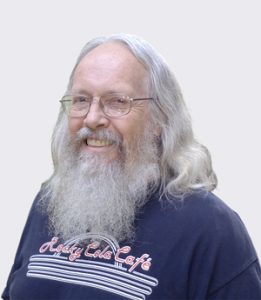
and loves local history.
Reach him at lawlerdad@yahoo.com.

TREASURES OF THE VALLEY <<< MIKE LAWLER added by CV Weekly on
View all posts by CV Weekly →