





“Life is the fire that burns and the sun that gives light. Life is the wind and the rain and the thunder in the sky.Life is matter and earth, what is and what is not, and what beyond is in Eternity.”
~ Lucius Annacus Seneca, Roman Philosopher, 4BCE – AD 65
Springtime weather is a rollercoaster ride. It is marked by highs and lows with periods of uncertainty as to what’s beyond the next blind curve. Thus has been our experience in the past few years. Late season snow and rain with periods of above normal high temperatures. Looking back over several weeks gives a good example of this as one day the thermometer climbs to 90 degrees and the sun shines brightly and by the very next day the temperature doesn’t exceed 70 degrees and the sun barely comes out from behind the foggy marine layer.
The May-June rollercoaster weather shenanigans fall within the “to be expected” or normal category. But one natural incident has meteorologists scratching their heads, questioning the still burning Pacific Palisades Fire. The fire began last Friday and was only 57% contained yesterday, Wednesday.
I was hoping the spattering of rain would not only help extinguish the Pacific Palisades Fire, but would also reduce chances for additional early season fires. To better understand the following is helpful. Dry, drought-like conditions exacerbate fires for two reasons. There is less water to put out early flames and dry weather speeds up the process of “curing.” Curing occurs when vegetation dries out to the point where its moisture content is impacted by the dryness of the atmosphere, not the soil.
Los Angeles Fire Dept. Chief Ralph Terrazas said a fire this large, sparking so early in the year amid relatively favorable conditions, is an ominous sign for the 2021 fire season.
“[Sunday], when I woke up, it was raining out here,” Terrazas said, “and the fire is still burning. That’s unusual fire behavior. Our relative humidity was 60%, our wind speed was under 10 mph, but we still had an active fire.”
The reasons? Drought-caused dry vegetation, hard to access terrain and fire suppression.
In earlier centuries, these hills were allowed to burn regularly, clearing the landscape of fuel and making the soil rich. But half a century of fire suppression – across the American West but especially in places like Los Angeles – made for a ready-to-ignite stockpile. Now, given the many homes, it’s hard to manage what’s called a “controlled burn.” Even when low winds make it safe, residents and HOAs often resist. Native peoples, for thousands of years, understood the benefits of fire.
Rollercoaster weather continues, amplified by gusty winds. Enjoy the ride before summer leaves us high and dry (and hot!)
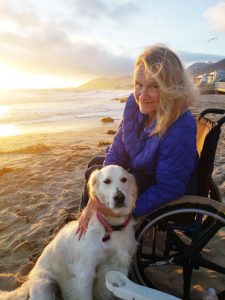
resident and Official Skywarn Spotter for the
National Weather Service Reach her at suelkilpatrick@gmail.com.

Weather in the Foothills <<< Sue Kilpatrick added by CV Weekly on
View all posts by CV Weekly →