





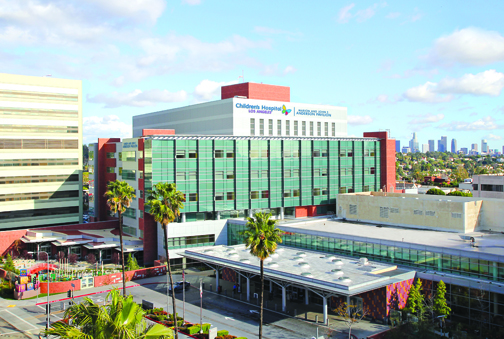
Photo provided by CHLA
By Mary O’KEEFE
The number of COVID-19 cases has been relatively low for children compared to adults. Of the 1,092,128 reported positive cases of COVID-19 in LA County as of Feb. 8, the total number reported of positive cases in children who are between 5 and 17 years old is 142,295.
Although many children who test positive for COVID-19 are asymptomatic, meaning they do not show symptoms of the virus or experience mild symptoms, there is a risk of a rare disease that parents should be aware – multisystem inflammatory syndrome in children (MIS-C).
MIS-C, formerly called pediatric inflammatory multisystem syndrome or PIMS, describes a health condition seen in children who have been infected with novel coronavirus, then recovered from it but later have an immune response that results in symptoms of significant levels of inflammation in organ systems, according to Children’s Hospital Los Angeles (CHLA).
“MIS-C is similar in some ways to other inflammatory conditions like Kawasaki disease and toxic shock syndrome. Children who have MIS-C generally did not have obvious symptoms when they were infected with novel coronavirus, like cough, and generally were healthy prior to developing MIS-C,” according to CHLA.
There were 81 cases of MIS-C reported in Los Angeles County as of Monday, up from 66 children diagnosed on Jan. 30, according to the LA County Public Health Dept.
Nationally, as of Oct. 1, 2020 the number of cases meeting the case definition for MIS-C in the United States surpassed 1,000. As of Feb. 1, this number surpassed 2,000. As of Sunday the total number of MIS-C cases reported was 2,060 with a total of 30 deaths nationwide, according to the Centers for Disease Control and Prevention [CDC].
“There are similarities between other inflammatory syndromes in children but this [MIS-C] does seem to be unique in that COVID-19 exposure usually occurs [two to six] weeks or so prior to MIS-C,” said Jackie Szmuszkovicz, a pediatric cardiologist and Kawasaki disease specialist at CHLA, in an interview with CVW. “So this is really late inflammation that comes after the acute infection and exposure to [COVID-19].”
Children may have been exposed to COVID-19 and not display any symptoms or have very mild symptoms but then several weeks later the children are developing this hyper-inflammatory response. MIS-C can cause the inflammation of organs and can decrease the function of the heart, Szmuszkovicz said.
“It can cause the dilation of the [heart’s] artery,” she added.
Doctors and researchers at CHLA are gathering data daily and joining others in the medical field throughout the world who are sharing data concerning MIS-C.
“It is still, thankfully, a relatively rare illness. I don’t think we have all the answers of MIS-C. We are doing a lot of research and learning every day but I would say the great majority of the cases of kids coming into CHLA are coming in a couple of weeks to six weeks after they had exposure,” Szmuszkovicz said when asked if MIS-C symptoms could present long after exposure.
One worrisome thing about MIS-C is that a child may have been unknowingly exposed to COVID-19, but showed no signs. That is why parents should remain vigilant. Szmuszkovicz added parents know their children’s behavior better than anyone else and should contact their pediatrician with any concerns.
She said she would advise parents to “keep an open mind” and to watch for any symptoms. Those symptoms, according to the CDC, include: A fever for over 24 hours, abdominal pain, vomiting, diarrhea, neck pain, rash, bloodshot eyes and feeling extra tired. Parents and caregivers are advised to contact emergency care immediately if a child has trouble breathing, pain or pressure in the chest that does not go away; confusion; inability to wake or stay awake; bluish lips or face; and severe abdominal pain.
It should be noted that MIS-C is rare but for parents and caregivers it is important they be aware of its possibility.
“We strongly encourage you to not delay seeking care for your child,” she said if symptoms present themselves. “We have seen that early treatment gives the best outcome for these children.”
Research continues and now when children come into CHLA doctors immediately now know what to look for and have more information on treatment.
“Things are changing rapidly. We are learning things every day around the science of COVID-19 and MIS-C,” Szmuszkovicz said. “Our team at Children’s Hospital LA is here to help the community. We are here to provide consultation for families and children but also to caregivers in the community who may not have yet treated this disease because [MIS-C] is so rare.”
The teams at CHLA also conduct webinars and perform other outreach to communities. Szmuszkovicz added she appreciates that the doctors at CHLA are specialists in their specific pediatric areas.
Doctors were prepared for this latest increase in the number of cases of MIS-C as they watched the number of COVID-19 cases recently increase to a “critically alarming rate,” she added.
For parents, as has been throughout this pandemic, the advice is to remain vigilant. CHLA’s youngest MIS-C patient was 4 months old; the oldest was 17.
For more information, visit https://tinyurl.com/1p7u2m86.

More MIS-C Cases Reported in LA County added by CV Weekly on
View all posts by CV Weekly →